Welcoming Our New Monk, Sadhaka Anantanatha
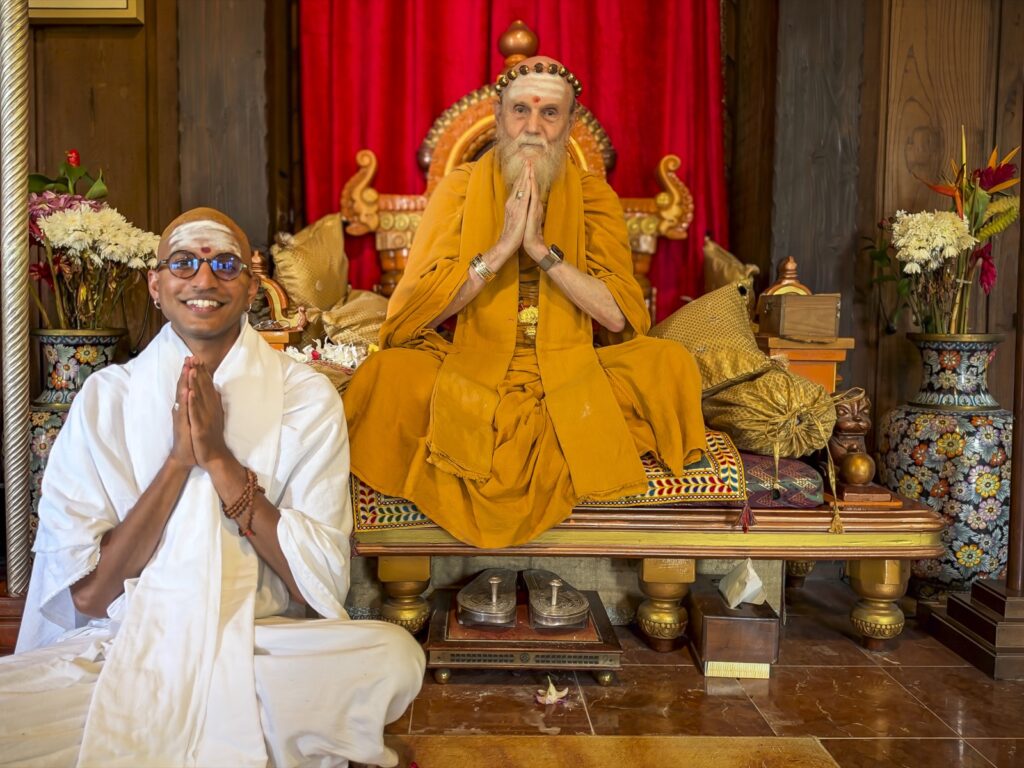
 Sadhaka Anantanatha takes his vows as a monastic
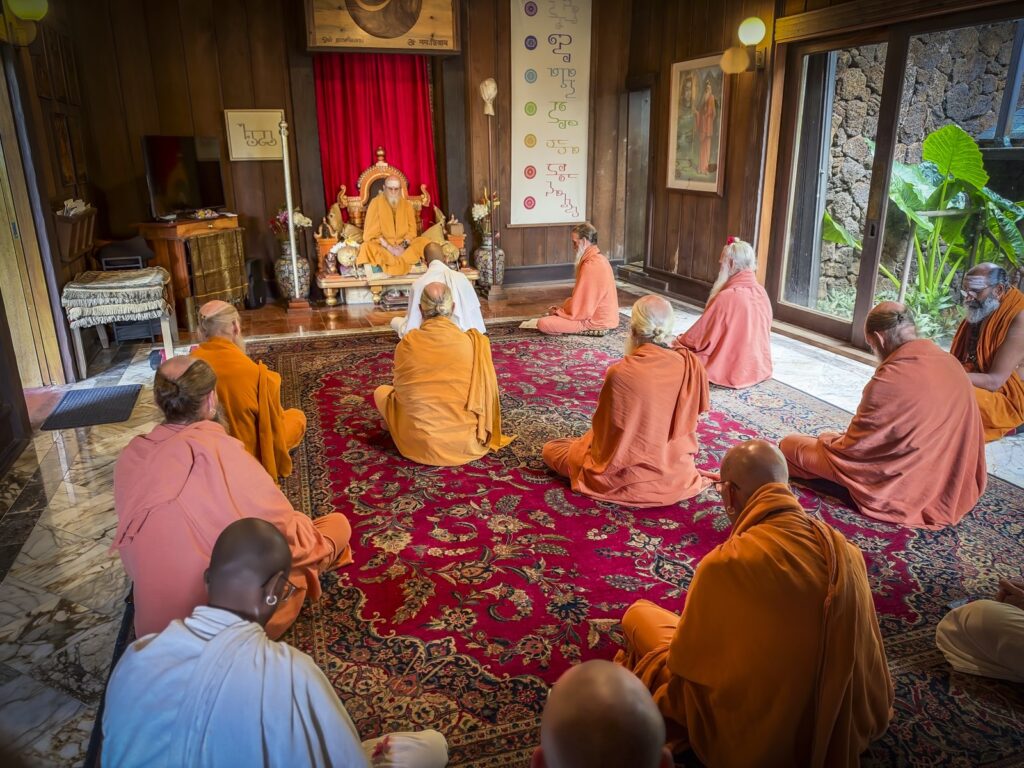
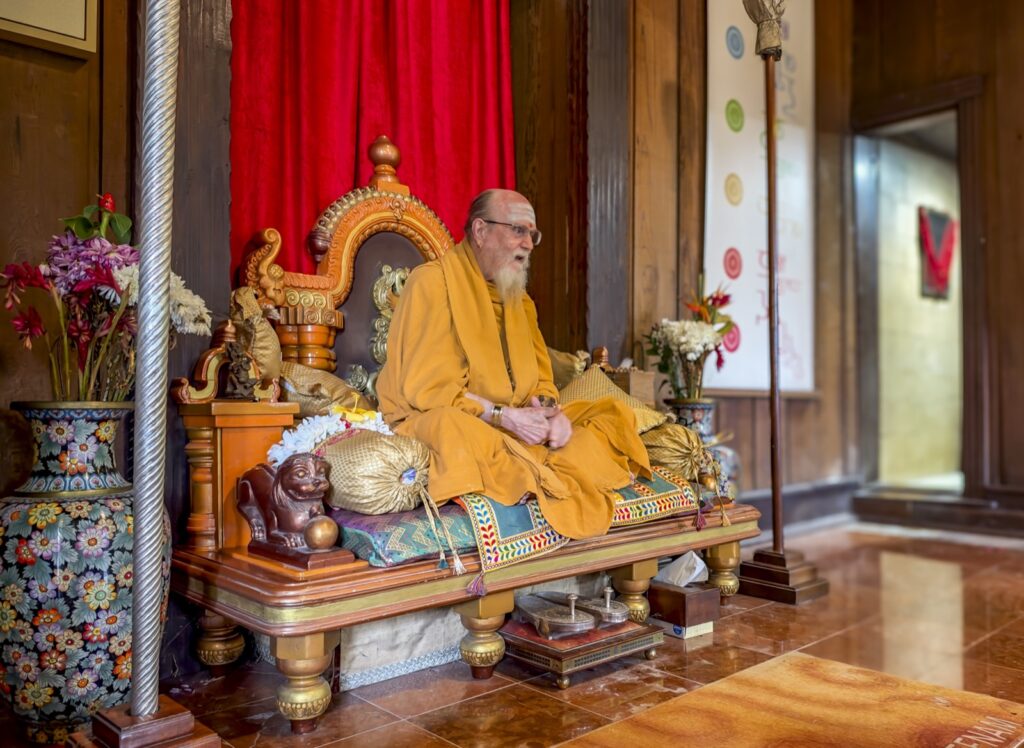
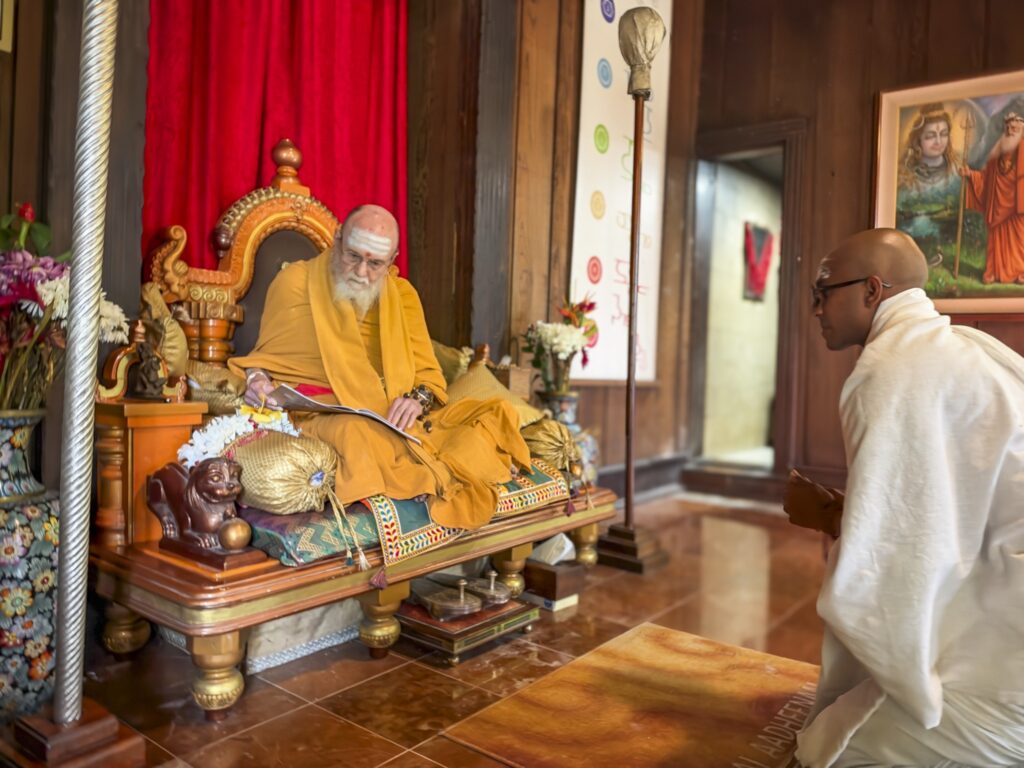
- Following the Ardra abhishekam, monks gather with Satguru at the Guru Pitam
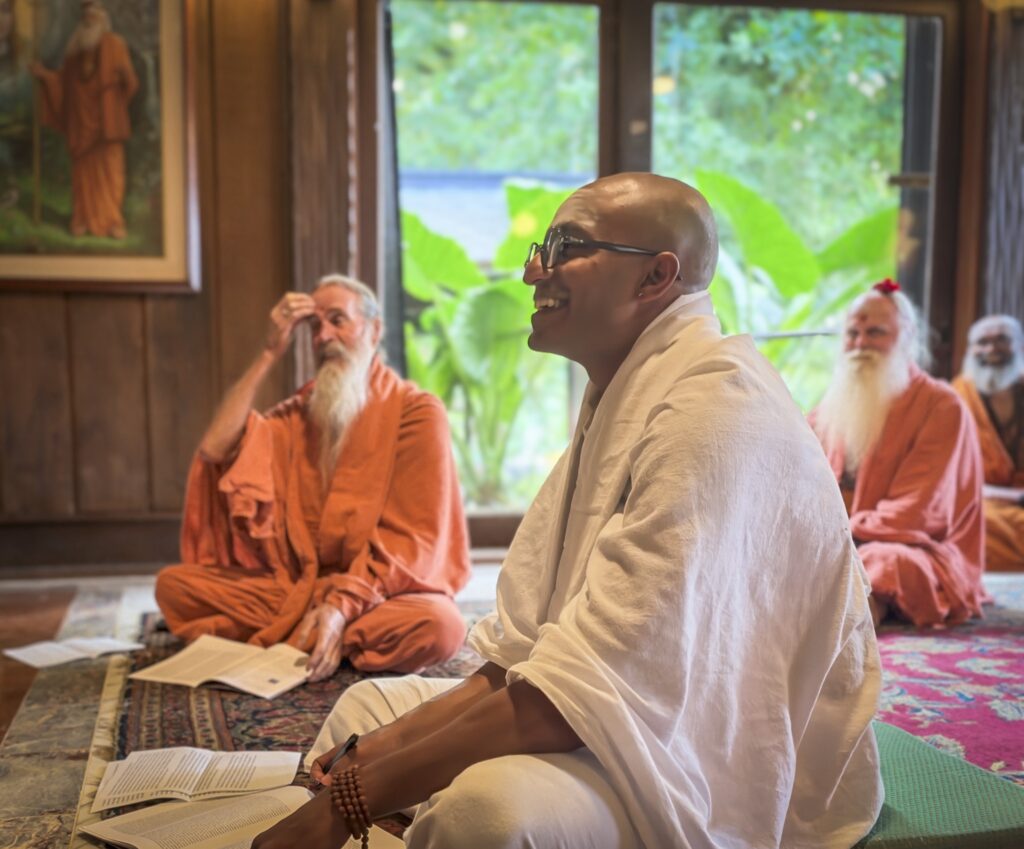
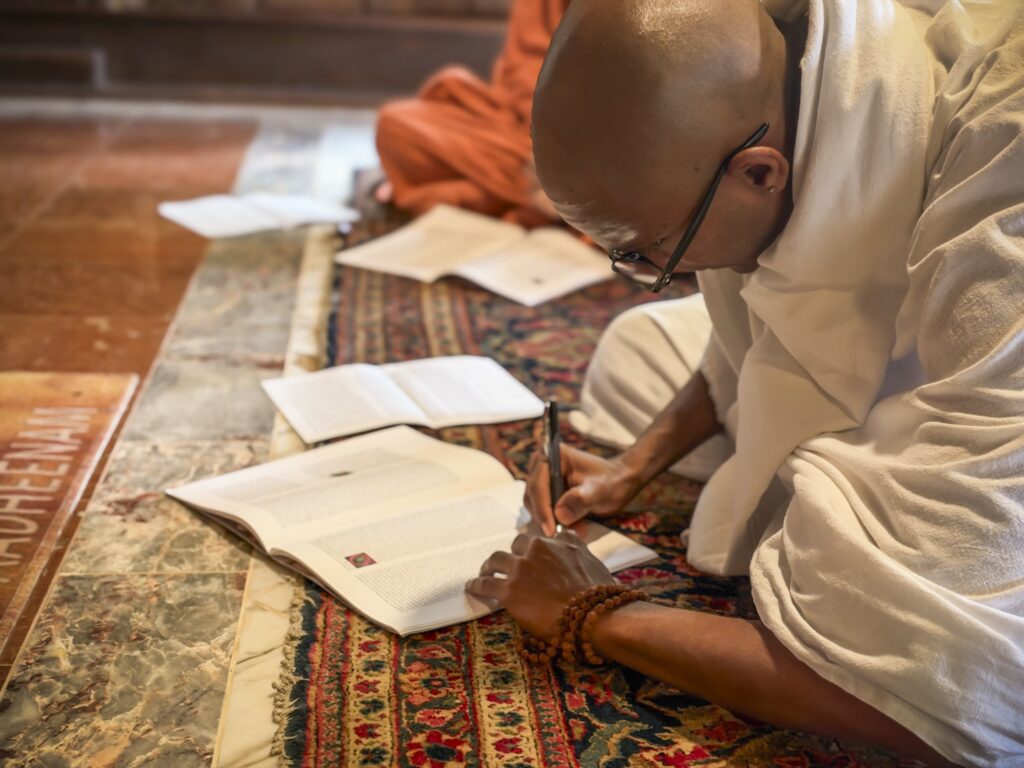
- Sadhaka has been working towards this day for a long time
- After reading his vows aloud, Anantanatha signs them
- Then Satguru adds his signature to Sadhaka’s vow booklet
- Sadhaka is given a sandalwood mala, a pavitra ring, and his monastic earrings
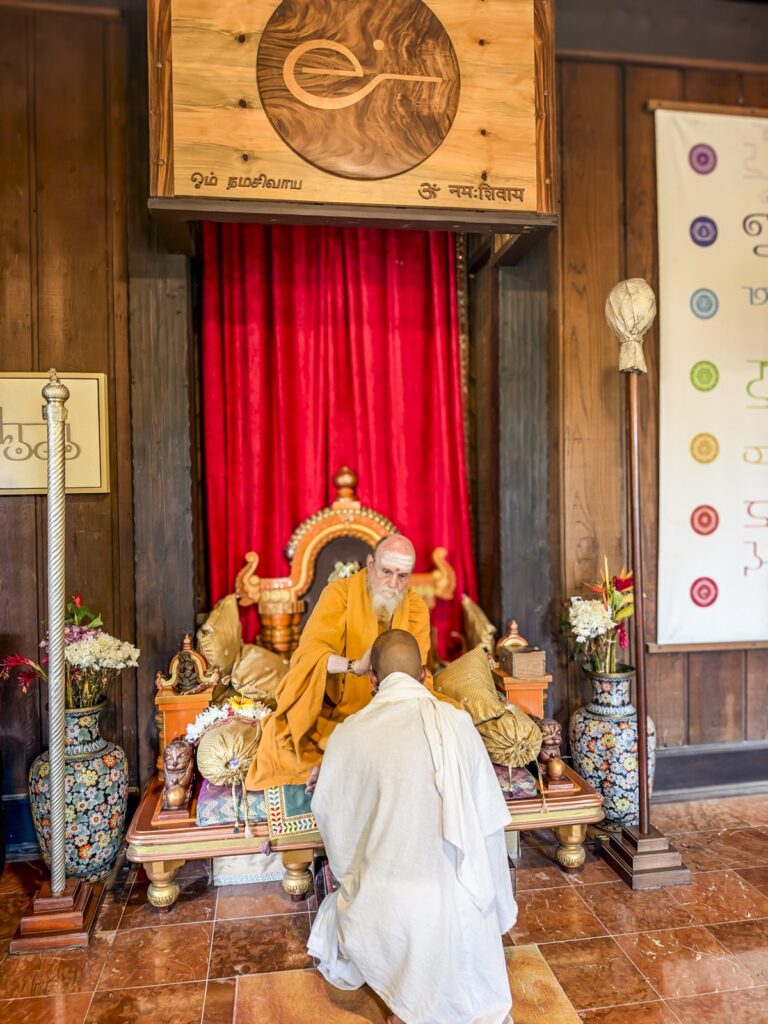
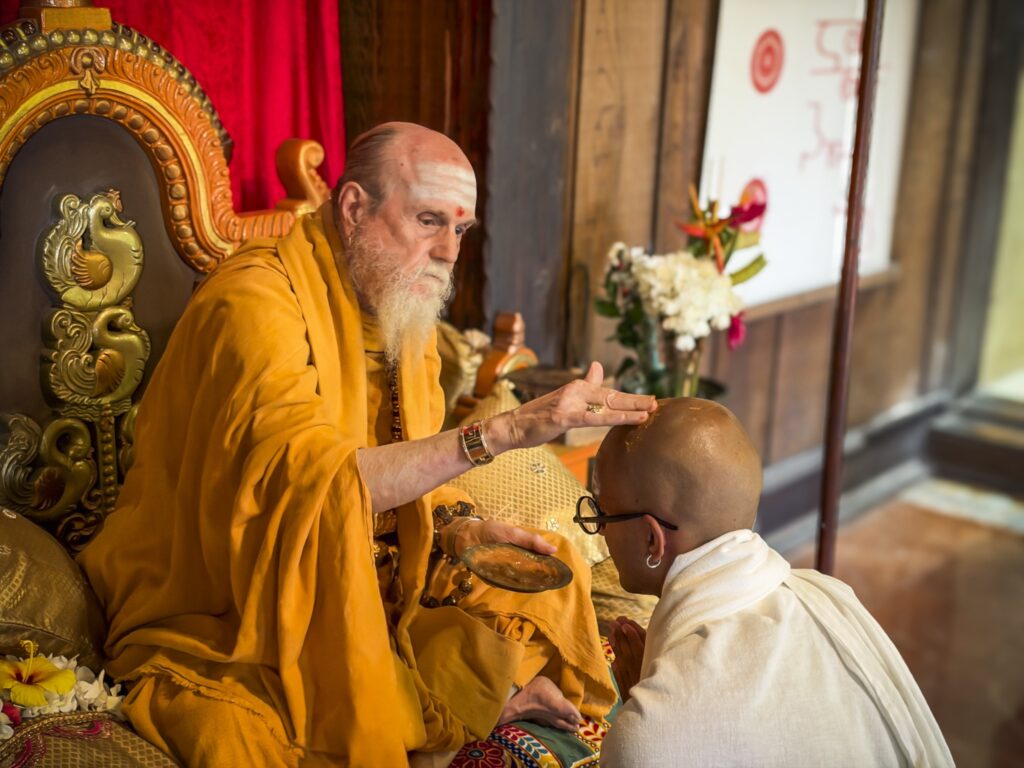
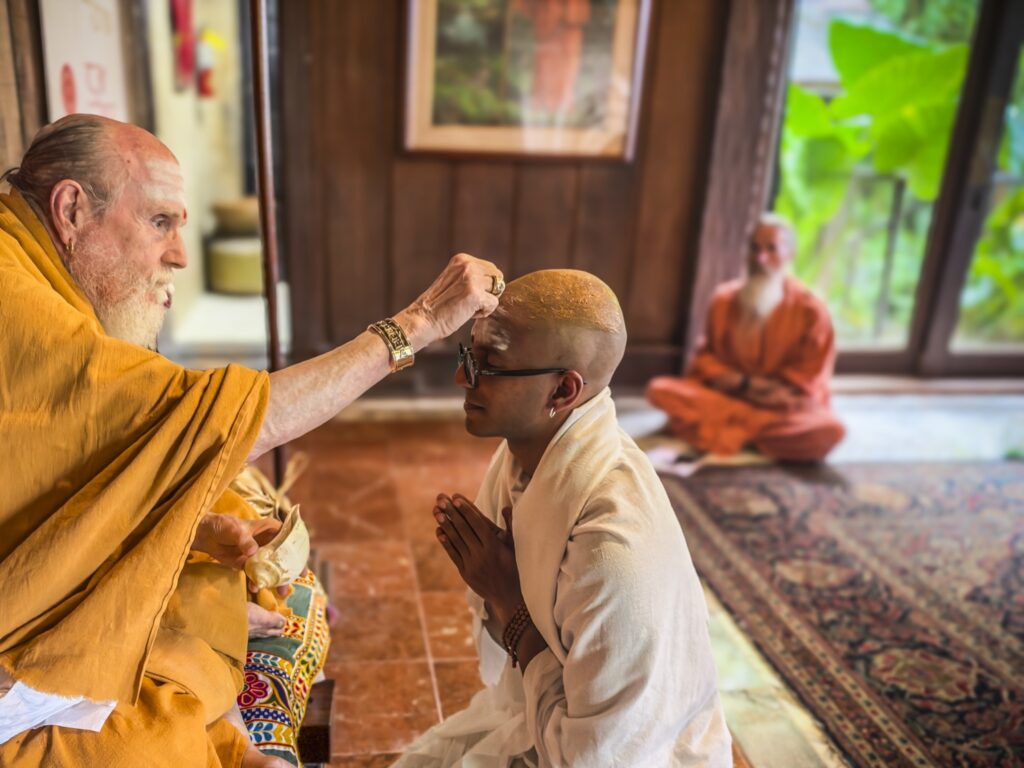
- Satguru then applies sandalwood to the top of Sadhaka’s freshly-shaven head
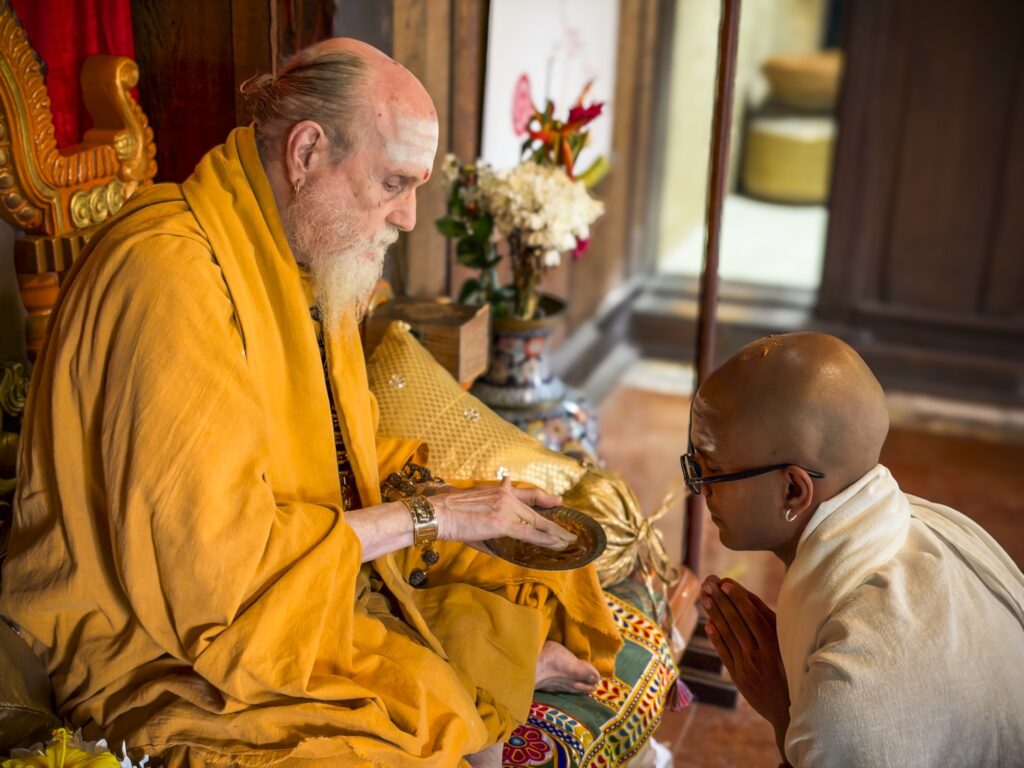
- A blessing of sacred vibhuti
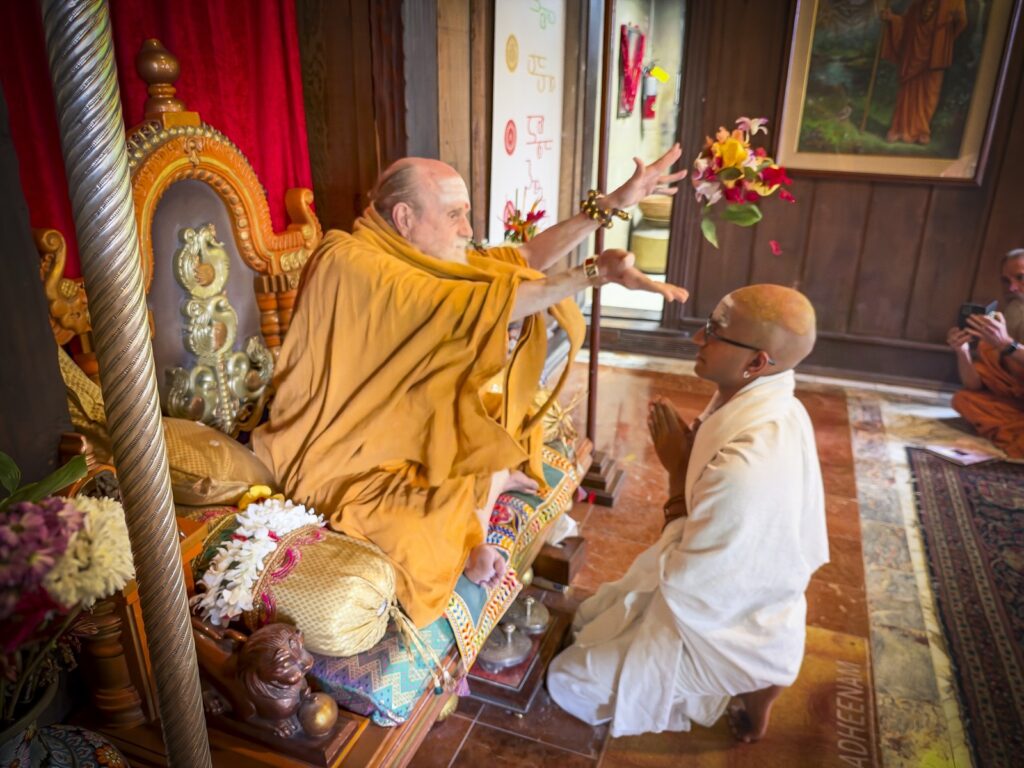
- And flowers!
- Aum Namah Śivaya
Jai Ganesha!
Vel Muruga!
Jai to the Kailasa Parampara!
Aum Namah Śivaya!
“Upon the connection between Guru and shishya, the spirit of parampara travels, the spirit of sampradaya travels. It causes the words that are said to sink deep. They don’t just bounce off the intellect, the message goes into the individual. Spiritual force doesn’t just happen.” – Gurudeva
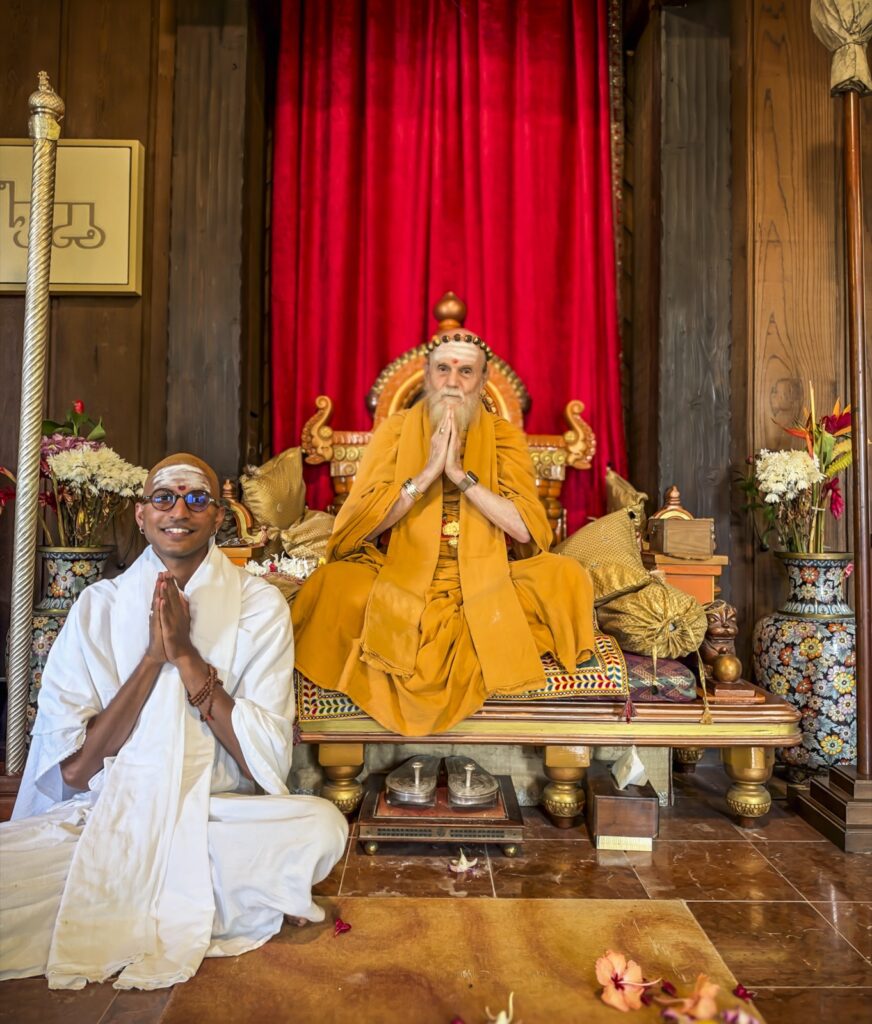
After six months in the Supplicancy program and a month sitting by the wall, begging entrance to the monastery, Anantanatha passed his review by the senior monks and has been accepted as a full monastic into Kauai Aadheenam. Yesterday, on Ardra nakshatra, following an elaborate abhishekam for Lord Nataraja, the monks gathered to witness Anantanatha’s vow taking. His title is now Sadhaka Anantanatha. This is always a joyous occasion for the new monastic and a great day for the monastic order.
The following are excerpts from a Sadhaka’s four vows:
THE SACRED VOW OF HUMILITY: known in Tamil as PANNIVU
Humility is the state of profound maturity in which the soul, immersed in the depths of understanding and compassion, radiates the qualities of mildness, modesty, reverent obeisance and unpretentiousness. There is an analogy in the Saivite tradition that compares the unfolding soul to wheat. When young and growing, the stalks of wheat stand tall and proud, but when mature their heads bend low under the weight of the grains they yield. Similarly, man is self-assertive, arrogant and vain only in the early stages of his spiritual growth. As he matures and yields the harvest of divine knowledge, he too bends his head. In the Tamil language this absence of pride or self-assertion is known as pannivu. Pannivu also means “jewel.” In the Tirukural it is said that “Humility and pleasant words are the jewels that adorn a man; there are none other.”
Humility does not consist in concealing our merits and virtues or in thinking ourselves worse or more ordinary than we are. Nor is it a pretended meekness. Rather it lies in not exalting ourselves before others for we perceive the grandeur of God Śiva in every human being and reverently acknowledge Him there. Humility in this ideal is the awakened perception that “Śiva is All.” It is the inner being predominating over the outer nature.
THE SACRED VOW OF PURITY: known in Tamil as TIRIKARANNASUTTI
Purity is the pristine and natural state of the soul. It is not something which the monastic attains as much as that which he already is, and which becomes evident as the layers of adulterating experience and beclouding conceptions are dissipated. Purity is clarity and clearness in all dimensions of being. It is innocence as opposed to familiarity with the ways of the world. It is for monastics the observance of chastity, called brahmacharya. In Tamil purity is given its fullest expression in the term tirikarannasutti, which means “purity in mind, speech and body.” These three–also called thought, word and deed–convey the fullness of the ideal of purity.
Purity does not consist in merely doing good and being good, though these are essential, nor is it an outward appearance or show of such goodness. It is primarily an inner quality, equally present in the saint who outwardly reflects the purity of his attainment and in the sage who inwardly rests in that same purity though his attainment may not be apparent. Purity is not a manner of behavior, though it may be reflected in our behavior, and there is no merit in taking on the appearance of being pure when one is not yet pure.
THE SACRED VOW OF OBEDIENCE: known in tamil as TAALVU ENUM TANMAI
Obedience is the state of willingness and cooperation in which the soul remains open and amenable to enlightened direction. For the monastic it is an unbroken pledge of trust in and surrender to the satguru, the guru parampara and the mystic process of spiritual evolution. In the Tamil language this definition of obedience is expressed in the term taalvu enum tanmai, which denotes “the quality or state of humble submission.”
Obedience does not consist in blind submission and yielding to authority, nor in weakening our own will that it may be dominated by the will of another. Yet it is, in another sense, submission to a sacred purpose and the divine authority of the Second and Third Worlds. It is, for the monastic, an inner quality that allows him to remain consciously tractable and responsive. In the beginning, while the instinctive nature remains strong and there exists a sense of “I” and “mine,” obedience is a surrendering of the ego to the soul or the instinctive nature to the spiritual nature. As long as the ego dominates the life of man, he will experience obedience as capitulation or subjection. As the soul unfolds and separateness is replaced by knowledge of the unity that pervades the universe, obedience is perceived as the union of minds and purpose, a state of harmony so complete that there can exist no distinction between him who gives and him who receives instruction or direction. True obedience is based on agreement, trust and knowledge, as opposed to passive servility, nonresistance or domination, which have ignorance and fear as their basis.
Confidence is the state of trust in which the sacred teachings and sensitive or personal matters are not divulged to others. Spiritual matters must be protected and preserved by those to whom they are entrusted, never wantonly or indiscriminately revealed. When we confide in another, we do so with the assurance that sensitive and serious information will not be inappropriately disclosed. In the Tamil language confidence is known as rahasiyam, meaning “secret or mystery.”
Confidence as applied to these Sacred Vows does not mean “certainty,” “a belief in one’s abilities” or “self-confidence.” Rather it is a confiding, a trusting and a relying upon. It is the controlled sharing of privileged teachings or information that should not be disclosed, but held in confidentiality. In its most simple form it is the keeping of a secret.
Confidence for the monastic may be defined as wisdom in handling information. The monastic must learn to hold in strict secrecy all spiritual direction and esoteric laws entrusted to him, never revealing them unless specifically ordained to do so. He must realize the wisdom of Saint Yogaswami’s statement that “Sacred is secret and secret is sacred,” never treating the inner teachings as ordinary knowledge to be published or spoken of to the public or prematurely disclosed to devotees.
Aum Namah Śivaya
Welcoming Our New Monk, Sadhaka Anantanatha Read More »