A few days ago, we visited our greenhouse, which is being managed by the Siddhidata Kulam’s mathavasi. During our visit, we were happy to see a fresh new batch of tomatoes and bell peppers growing beautifully.
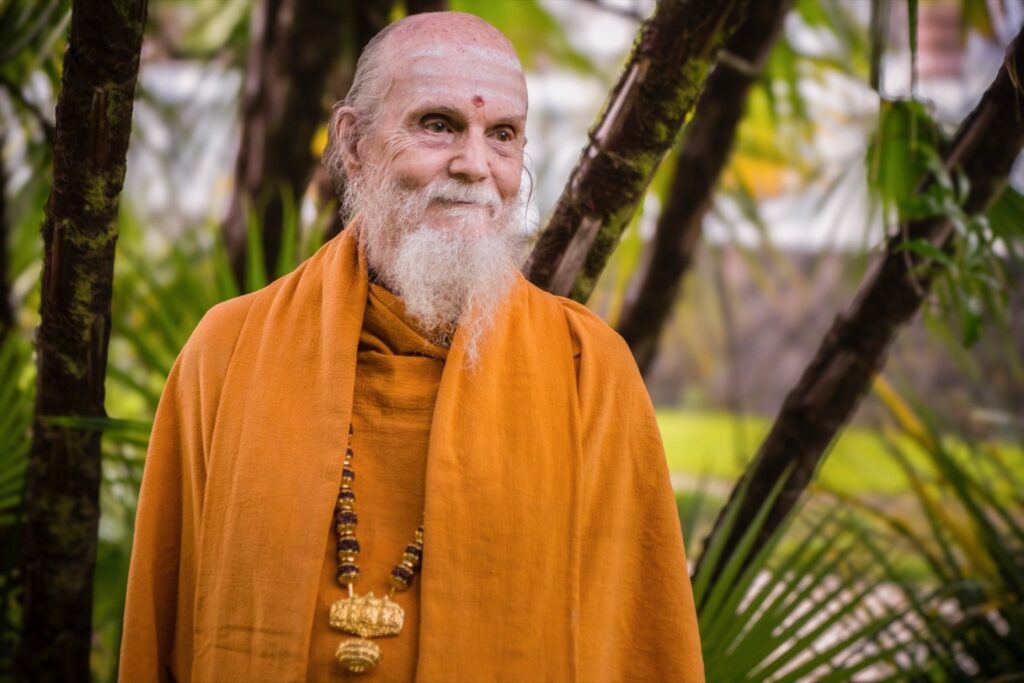
While we were there, we also observed how Sadhaka Shankaranatha is attentively caring for the greenhouse, ensuring everything is nurtured with dedication and care.
A 4-ounce bag ready to ship. Notice the see-through window. A typical daily use is to add a teaspoon to morning juice or a protein shake. It has a surprisingly sweet taste, unlike the juice which is quite medicinal (as most medicines are).
The Polynesians’ double hulled canoes traveled thousands of miles in open waters and storms.
Our two dehydrating chambers.
The chips ready for the milling machine which grinds them into a fine powder.
This is the powdering machine. It takes about an hour and a half to powder the chips from the dehydrators.
A bucket of finished powder. It’ll be about 6% moisture content.
The powder is also put in capsules, a preferred product for some people.
The first Polynesians reached Hawaiʻi around 300–800 CE. It was a time in India of the regional kingdoms of the Pallavas and Pandyas, a time of great bhakti movements and temple building. These first seafaring adventurers probably came from the Marquesas (south of Hawaii and East of Australia), with later waves from Tahiti. They sailed in double-hulled voyaging canoes using stars, currents and birds to navigate. The journey of roughly 2,000–2,500 miles took 3–6 weeks. It was hazardous—storms, starvation and dehydration posed real risks, and some voyages likely failed. They brought “canoe plants” and animals choosing things they needed for survival in the new land: taro, breadfruit, coconut, banana, sugarcane, pigs, dogs and chickens. Kauaʻi was among the earliest islands settled.
They brought the noni tree as their primary medicine, a fruit which strengthens the human immune system helping it to fight off all kinds of ailments. Fast forward to today, when the monks tend 10 acres of noni trees and ferment the fruit into a healing juice. They also make noni powder. It is a new product for us, and seems promising. One Swiss company imports it to add “organic Hawaiian noni” to their superfood products.
The process is simple but time-consuming. It begins with harvesting ripe, firm fruit from the tree. The fruit should be mature and mostly white, but not overripe or soft enough to fall apart. Next comes sorting and washing with water to remove dust and debris.
After washing, the fruit is allowed to ripen further in 30-gallon food-grade containers for up to a week until it becomes uniformly soft. Once ready, it is processed through a pulping machine to remove seeds and create a smooth mash. This pulp is spread in thin layers on trays for drying.
Drying happens in two dehydrators until the mash becomes crisp. The dried product is then tested for moisture to ensure stability and shelf life.
The final step is breaking the large thin sheets into chips and pulverizing the hard, dried fruit into a fine powder. The finished powder is packed into sealed bags, labeled and stored in a cool, dry place awaiting shipping.
Our small book, Power of Affirmation, is just about out of stock, so we got it reprinted in Malaysia. It is a fancier print job than our other books because it has gold foil printing on the cover, is printed on thick card stock paper throughout, has a built-in bookstand and is wire coil bound. At the same time in Malaysia we also reprinted Path to Siva and Know Thyself for providing complimentary copies to youth in Malaysia and Singapore. Sample copies of the three reprinted books arrived on Kauai several days ago. One of the affirmations:
“I am the complete master of all my forces. My spiritual energies govern and control the force fields wherever I am for the highest good. Through understanding, being pure, full of spirited life, I am filled and thrilled with unlimited power, now and forever.”
In the last photos, enjoy spider lilies in the early morning.
As Nitya Shankaran Mogan comes toward the end of his taskforce stay, he is spending about a week helping out the Minimela staff in the mornings. Here he is at the cashier desk, being efficient with time by making more bracelets in between visitor purchase inquiries. He also shared a couple of the photos he took over the last few weeks.
Thank you Nitya for your tireless service for a month.
Finished bracelets and other items on display
Nithya took this photo during the Iraivan Samvatsara Puja
Nithya took this sunrise photo from the back porch of our taskforce residence
A clear day this morning before heavy rains are forecast starting this afternoon through tomorrow
A family photo with the Nataraj Family at the Natural History Museum
Our monks landed in New York on a sunny spring day
While waiting to check into their hotel, they take a Sunday morning coffee-walk in Central Park.
The next Day, Gajanan leads everyone through the Natural History Museum
Dinosaurs!
The 3rd and final day was the conference
In the evening, some time to explore the city a bit. Times Square was only a few blocks away.
The next morning, our monks flew home with the sunrise in tow.
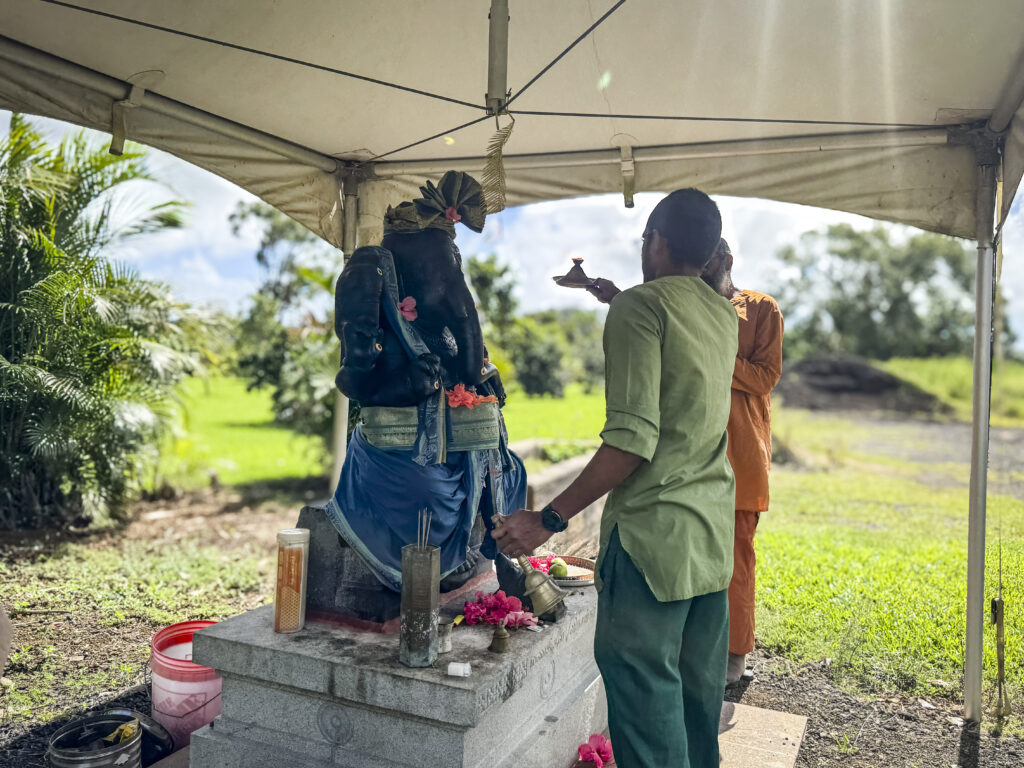
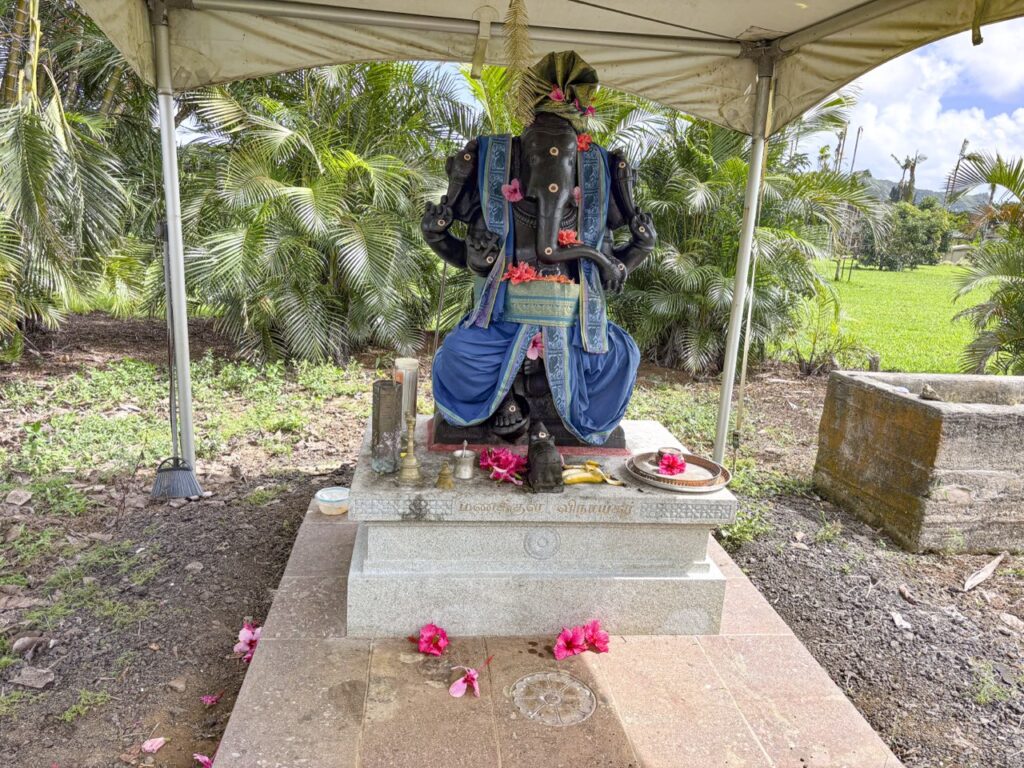
Jai Ganesha!
Last week, Sannyasin Tillainathaswami and Sadhaka Sabanatha made a quick trip to New York City and back. While there they enjoyed spending time with the Nataraj family, as well as exploring around Manhattan. Our monks were in the city for a conference that focused on AI tools in digital media creation and workflows. There were many high-level presenters and executives there, including creative leaders from LucasFilm, Paramount, Nvidia, Runway Ai, Adobe, and a variety of film companies, who are all finding the best way to implement ai into their creations, without sacrificing the heart of their work—human creativity. Many of the media producers there emphasized that they always start with human ideas, artwork, character design, story, etc. and only use ai to supplement the workflows that follow. Nvidia presented info about their new supercomputers and gave a glimpse into where video-creation ai tools are going, as far as their power and speed. Our monks are working to implement some of the ideas presented, particularly from companies that outlined their creative workflow for their short films and tv shows. Hopefully this will help reduce the friction and time in creating our educational content.
Recently, Sannyasin Yoginathaswami and Sannyasin Mayilnathaswami visited Portland, Oregon. Below are their words:
“Yesterday, we went to Kondapi’s place for breakfast, and then they took us to the Japanese Garden at Washington Park. Namrata and her husband, Jagadish, met us there. It was a beautiful place with many camellias, magnolias, and cherry blossoms in bloom, along with serene Zen gardens. There was also a rose garden right next to the Japanese Garden, but the roses had not started blooming yet.
After that, Jagadish took us to a holy arboretum trail with beautiful cedar, redwood, and spruce trees. It was about a one-hour trail with wonderful trees to see. Then we were taken to a Chinese garden in downtown Chinatown. It was a small place, but very beautiful and interesting, with much to see.
We then returned to Kondapi’s place for lunch. After that, we went back to the hotel to rest. In the evening, we had a short Ganesha puja, and Yoginathaswami gave a talk about Kauai Aadheenam, personal sadhanas, and karma. There were many wonderful questions. Afterward, we had dinner and returned to the hotel.”