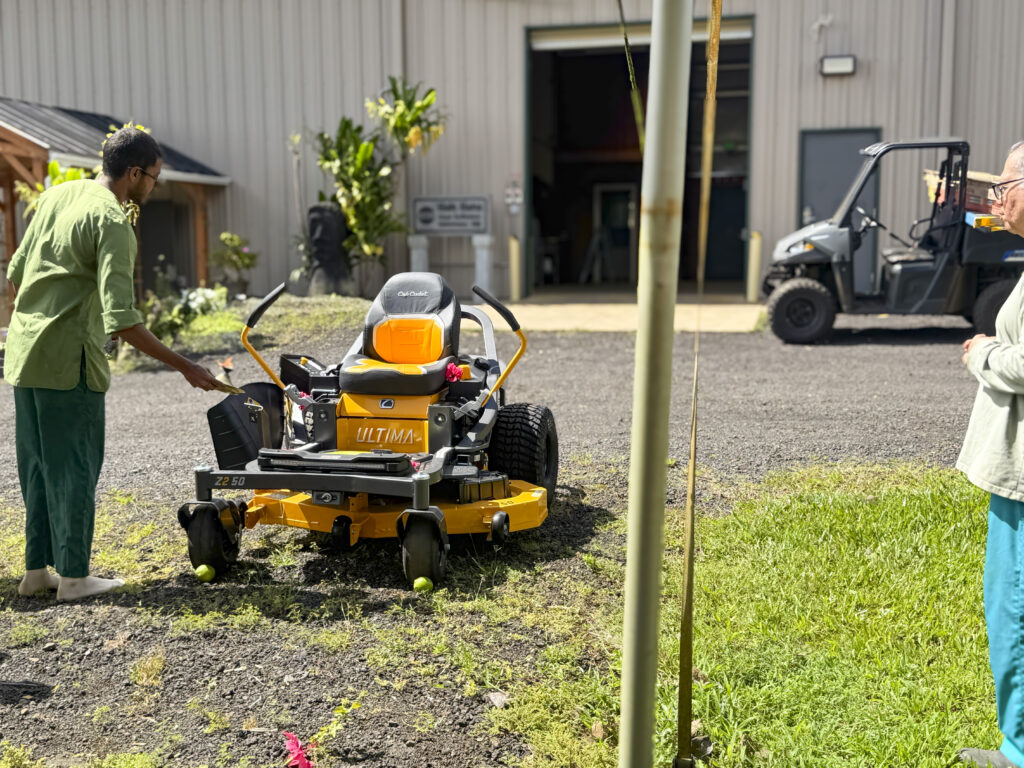
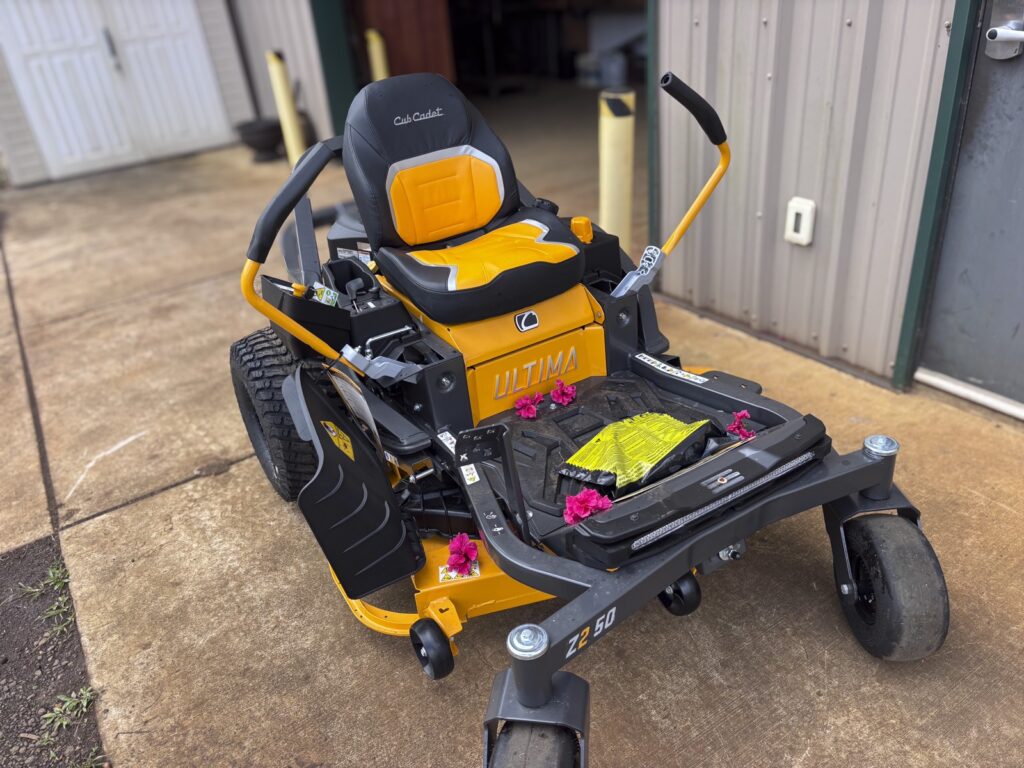
Pradeep uses the machine to clear both sides of the road
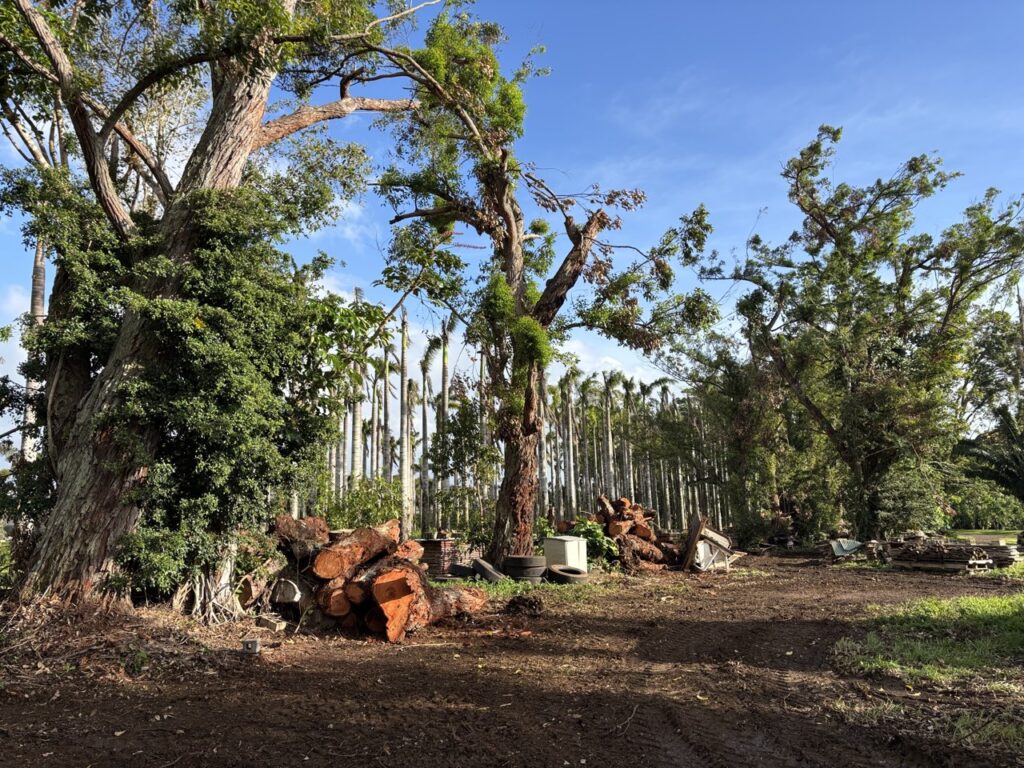
Camphor logs
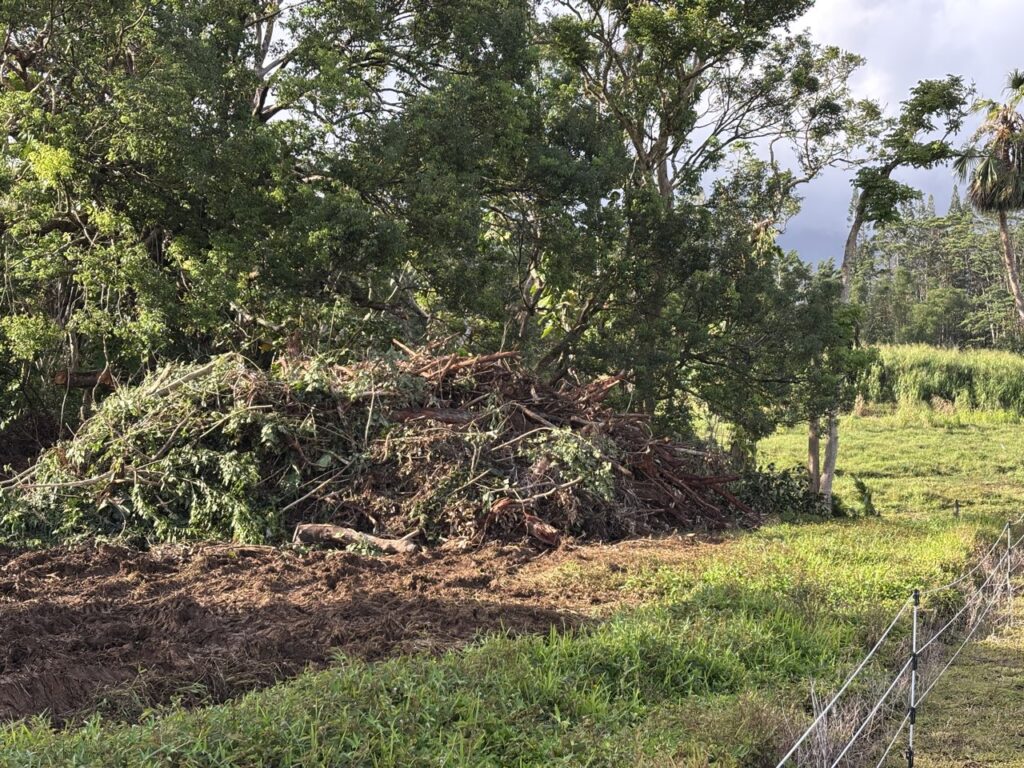
Blue gum and camphor logs await future milling
Aum Namah Sivaya!
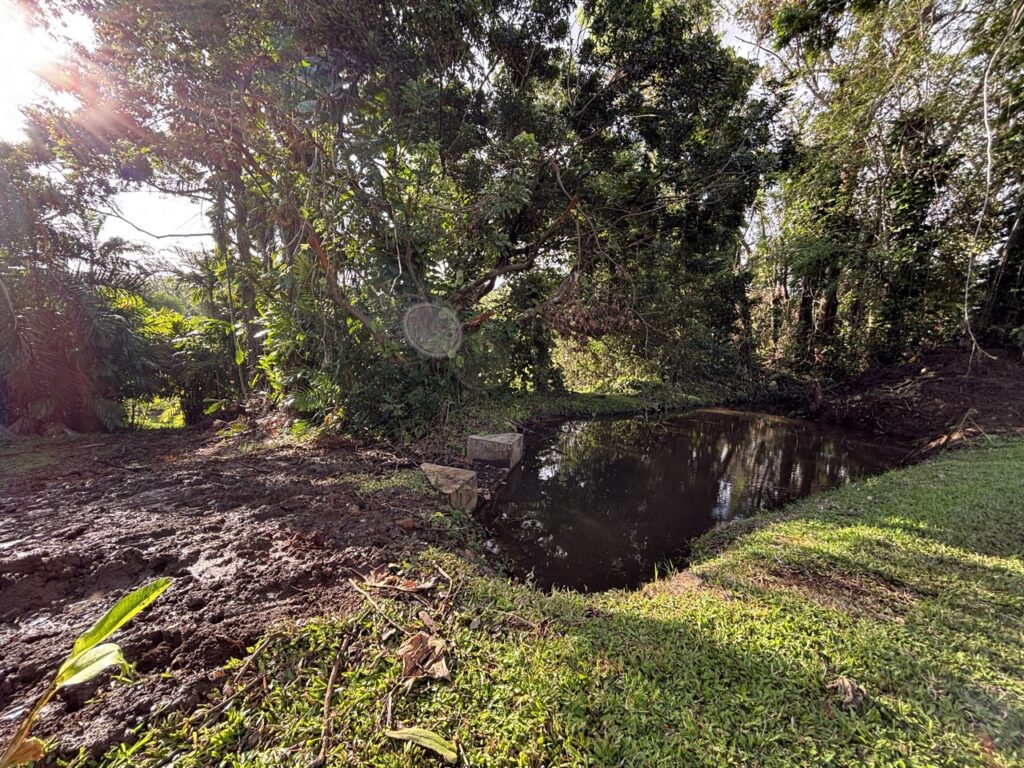
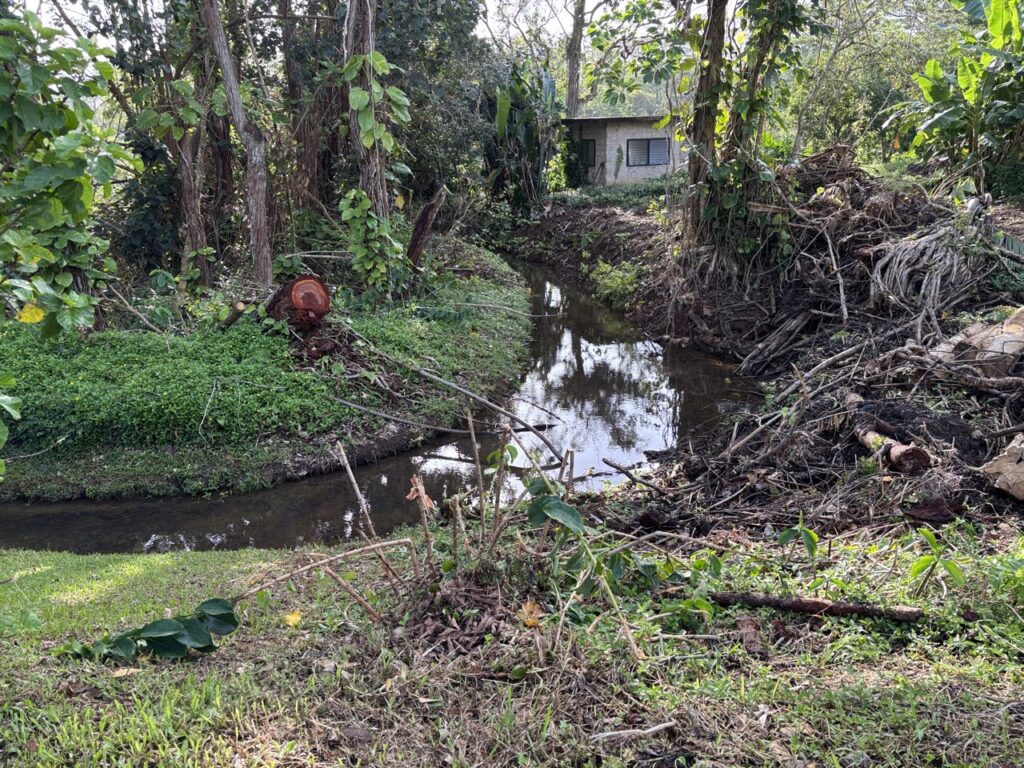
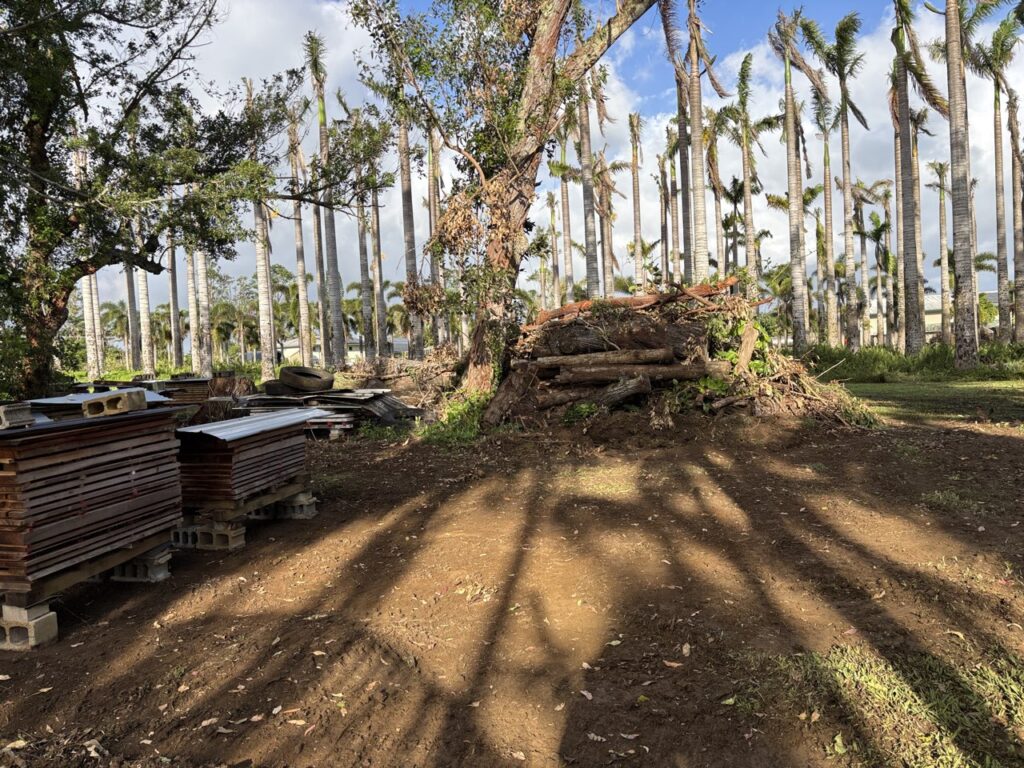
Recently, Pradeep and his team were continuing to clear fallen trees from other parts of the monastery property. Today we share photos of an enormous palm tree being cleared by a large excavator operated by Pradeep. The road these palm trees once grew on was the major path down to Iraivan temple. Clearing this area reopens a major throughway for monks and devotees. Nearby, fallen wild hardwoods were removed; they will be saved for future carpentry projects. These logs were perfectly straight, measuring twelve feet long and had a wide enough diameter to be milled into usable lumber. Once these blue gum eucalyptus and camphor trees are milled, they will spend many years curing before they can be used for future construction. The monks are grateful to find ways to use trees that fall on the monastery’s sacred grounds.
Pebbles, the garden duck (not to be confused with Bubbles the white duck)
Shreyas enjoys working with his hands
Here he disassembles the pallets
Jai Ganesha!
Not long ago, Taskforcer Shreyas spent his day cultivating his gardening and carpentry skills. He served in the monastery garden, removing soil around the footings of one of the high-tunnels. This high-tunnel was used for growing zucchini and summer squash year round. However, the hurricane damaged the screen of the structure, making it unusable until repaired. In order to replace the side screen, a small trench was dug near the high tunnel. Shreyas also disassembled a large wooden pallet that was used to ship some equipment to the monastery. The wooden 2×4’s he saved will be used for numerous projects in the future.
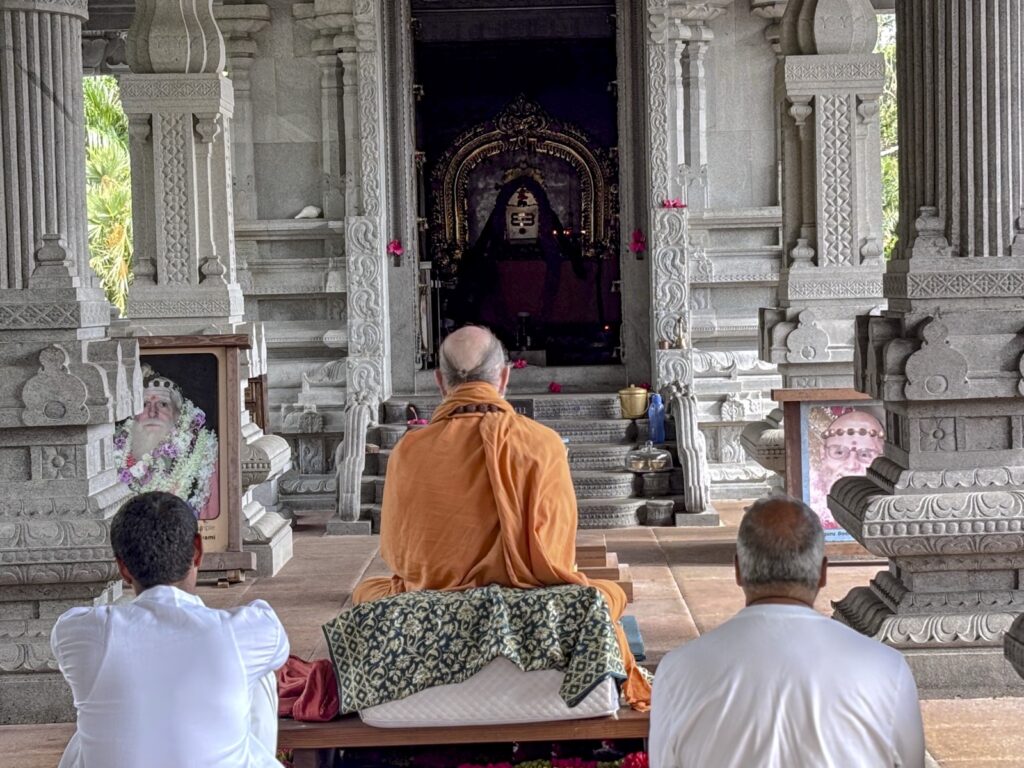
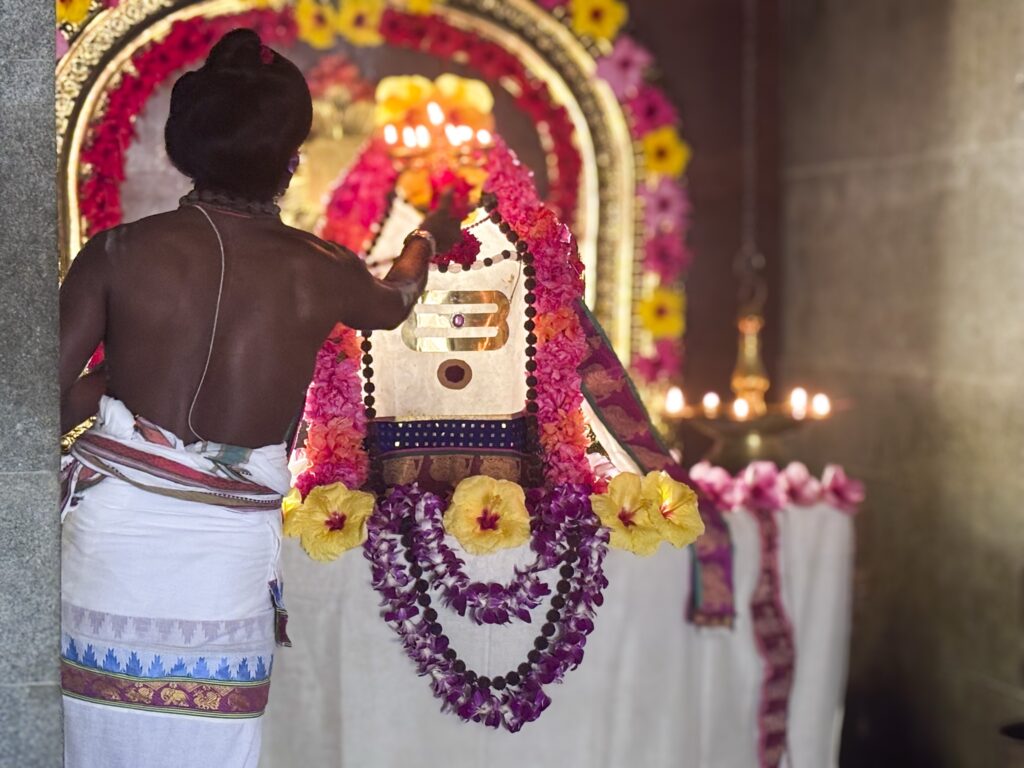
In the early morning today in Kadavul temple, the monks and many devotees worshiped Gurudeva on the auspicious day of Chitra nakshatra. This month’s puja was noteworthy because it was the 333rd (a memorable multiple of nine) pada puja performed since his Mahasamadhi in November of 2001. Sadhaka Sabanatha and Yogi Haranandinatha performed the powerful ceremony. All those who attended felt the blessings from the inner worlds flow out and energize them for the week ahead.
Below is a talk given by Satguru Bodhinatha Veylanswami in 2017, he talks on the importance of having a Satguru. Aum Namah Sivaya!
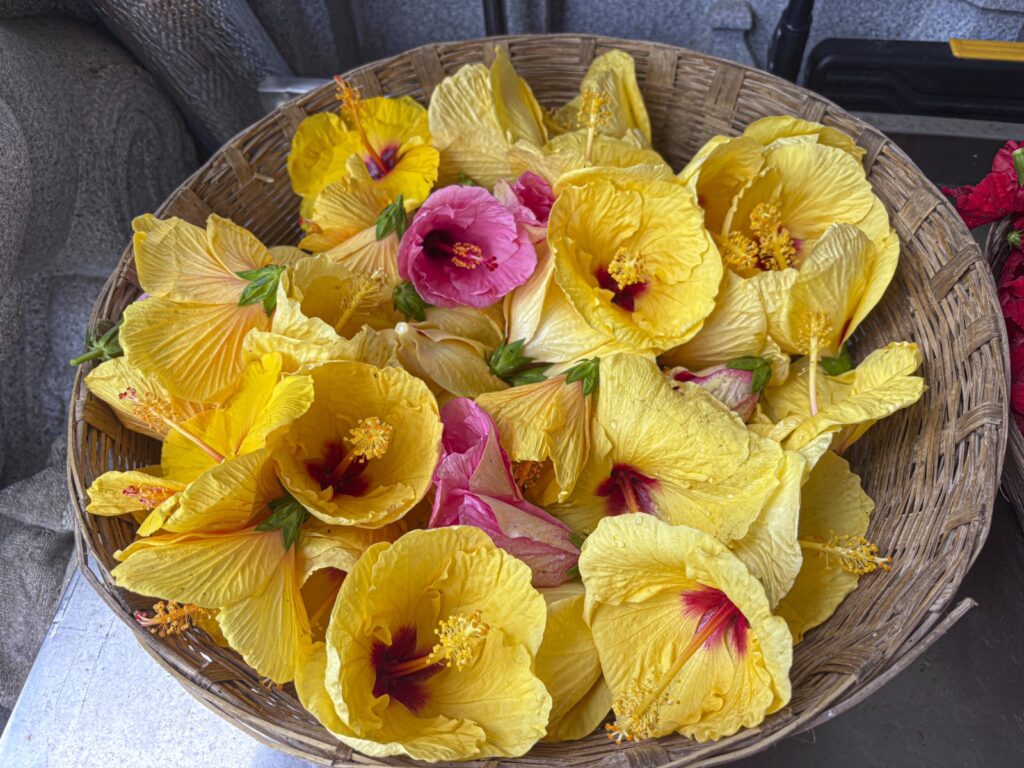
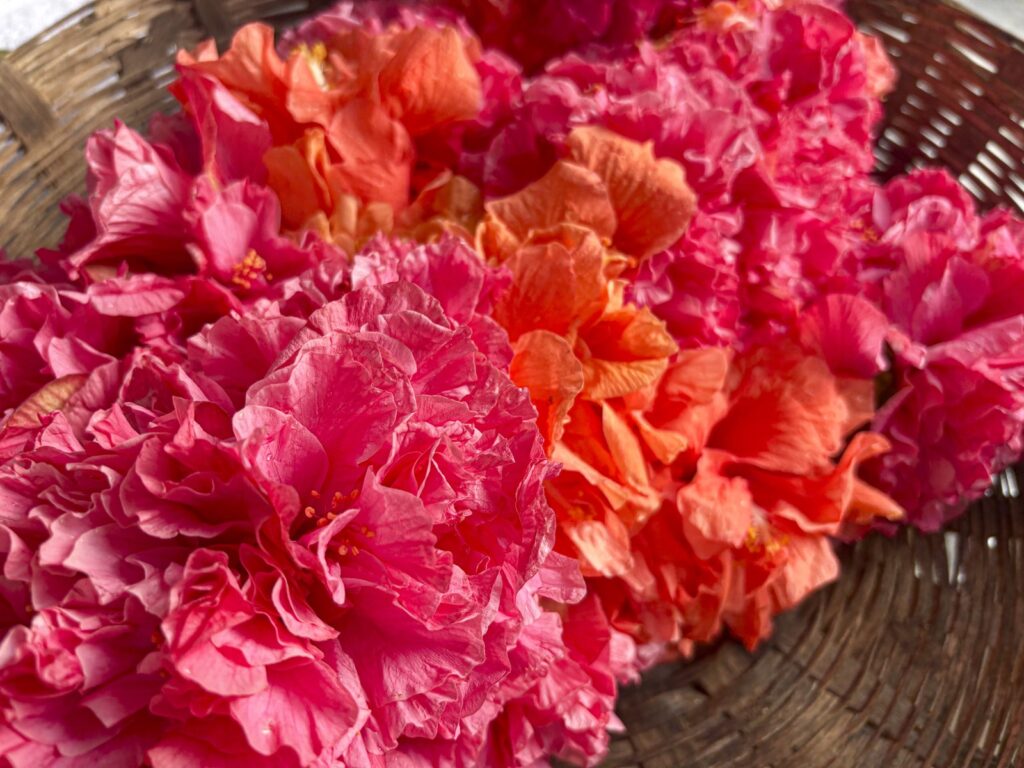
The blessed temple flowers from Nataraja become our food!
lush Japanese pumpkin vine
This pumpkin will be ready to pick in the weeks to come
Vel Muruga!
Today, we shadow Śivanadiyar Arinien around the monastery. His day is filled with a dynamic balance of temple worship and selfless seva. He enjoys singing devotional hymns while the Muruga pujari adorns the Deity with fresh flowers and richly embroidered clothing. During the height of the puja—the final arati—Arinien receives Muruga’s blessing, encouraging his mind to become calm as a still lake. After the puja, he heads to the garden with compost buckets. He empties their contents into a large composting bin, layering the food waste with woodchips to help it break down into beautiful soil. Besides composting, he attends to many other garden duties, including growing food. He shows us a sprawling pumpkin vine that is harvested weekly. Walking the monastery’s German shepherd, Bhairava, is another duty he performs with a smile and enthusiasm.
An aerial photo of the noni orchard on our vast agricultural land
The road that leads to our agricultural parcel
Exotic hardwoods grow silently
These unripe fruits will soon be ready to harvest
The trees look happy and healthy
Large Noni ripens
Sacred mango tree watches over our older noni orchard
Song of india grows freely
Jai Ganesha!
Today, we explore the lush and pure lands of Himalayan Acres. Natyam Shankaranatha joins Acharya Arumuganathaswami on our agricultural land which is across the river from the main monastery property. Here we showcase some of the sights that he saw.
Acharya and Natyam treaded through the hundreds of acres of exotic palms, hardwoods and noni trees. Upon seeing the noni trees up close, Acharya was inspired by the high fruit count on the branches. The monks look forward to picking many hundreds of pounds of noni fruit in the days to come.
The Satguru conveys the timeless teachings with Dakshinamurti presiding.
Siva sits under a banyan tree south of Iraivan Temple.
Beautifully crafted in Mahabalipuram, India.
View from Iraivan.
The sages receive the Grace of silent knowing.
He is 12 feet tall.
The Vedas in His left hand.
The foot of Arul and Grace.
Dakshinamurti literally means “south-facing form.” Dakshinamurti is Lord Śiva depicted sitting under a banyan tree, teaching four rishis at His feet through mauna, silence, while showing the chin mudra with His right front hand. In chin mudra, the tips of the thumb and forefinger are joined to form a circle while the other fingers are kept open and extended. The palm faces outward. It is a gesture of imparting spiritual knowledge and is also known as jnana mudra. The joining of the two fingers symbolizes the realization that jiva and Śiva are in nondual union. The index finger represents individual consciousness, the jivatma, while the thumb symbolizes supreme consciousness.
The Dakshinamurti Sadhana for Pilgrims
Among the many sadhanas that pilgrims can perform, one of the sweetest is the Dakshinamurti Sadhana, honoring the Silent Guru within. Dakshinamurti teaches not through words or intellectual instruction. Rather, His silence is the force that awakens the spiritual knowledge already resident within us.
Sadhana Practice
Standing before Dakshinamurti, north of Iraivan Temple, offer flowers and chant a simple Dakshinamurti chant three or more times.
Below is a simple chant that may be used. If you prefer another traditional chant to Dakshinamurti, it may also be recited. Afterwards, sit quietly and reflect upon Dakshinamurti’s silent revelation of the nondual union of jiva and Śiva.
Guru Brahma! Guru Vishnu! Guru Devo Maheswaraha! Guru Sakshath Parabrahma Tasmaisree Gurave Namaha! Gurave Sarva Lokanam Bhishaje Bhavaroginam! Nidhaye Sarva Vidyanam Sri Dakshinamoorthaye Namaha!
Quote from Gurudeva
“Once freed by God’s grace from these bonds—which do not cease to exist, but no longer have the power to bind—the soul experiences nirvikalpa samadhi. This is the realization of the Self, Atattva Parabrahman—timeless, formless, spaceless—a oneness beyond all change or diversity.”