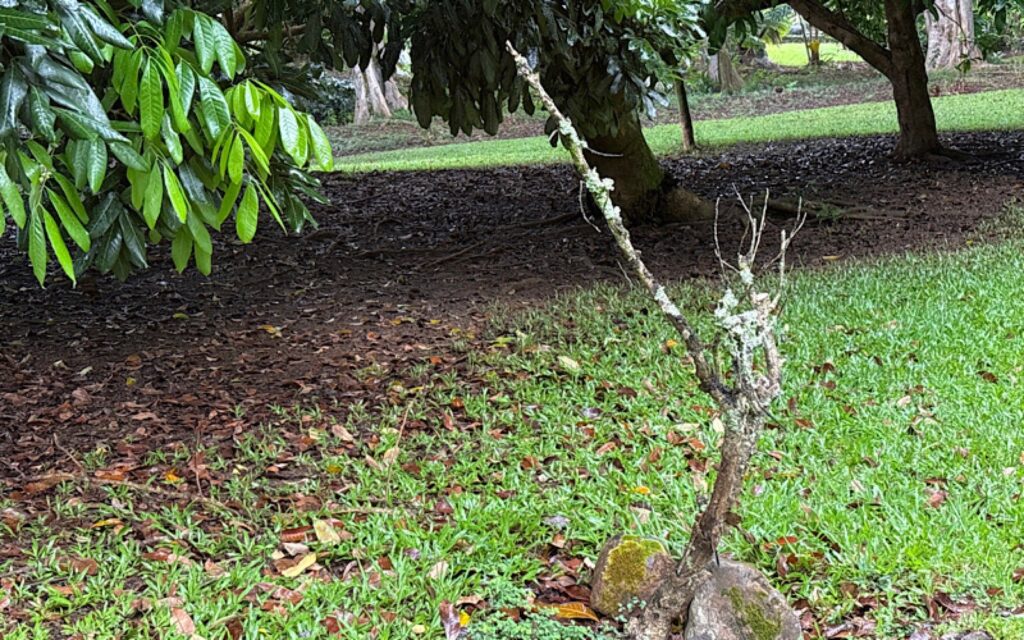
The several-decade-old hybrid hibiscus that fully died just after doing a successful air layering
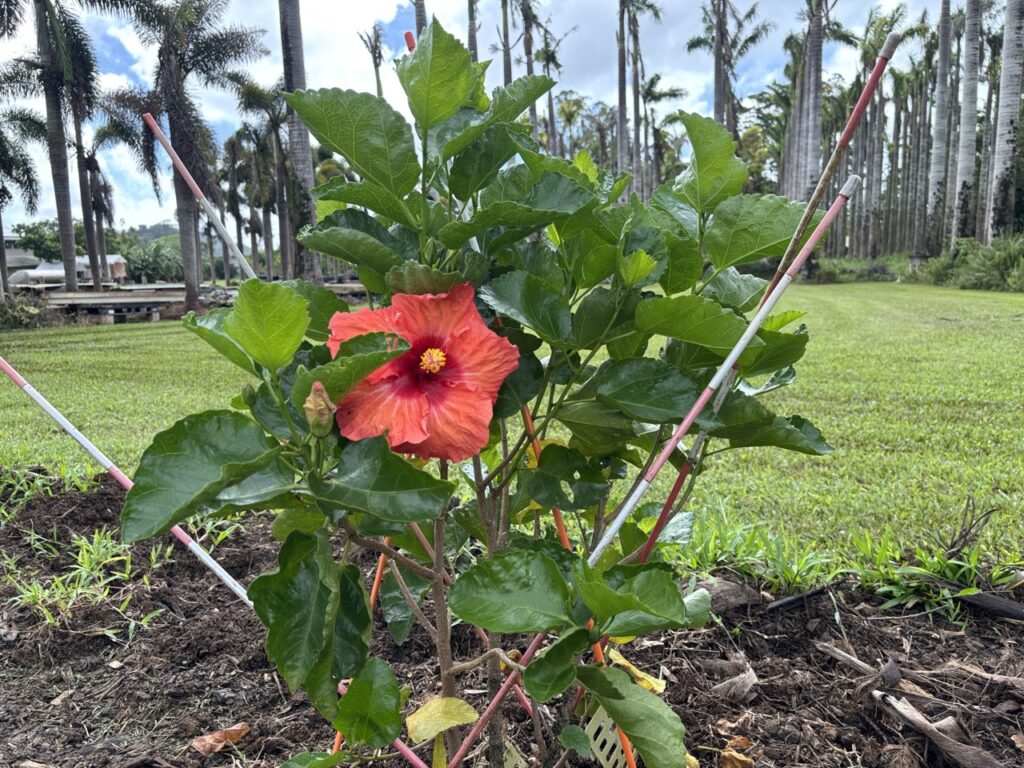
The air layered cutting is now thriving
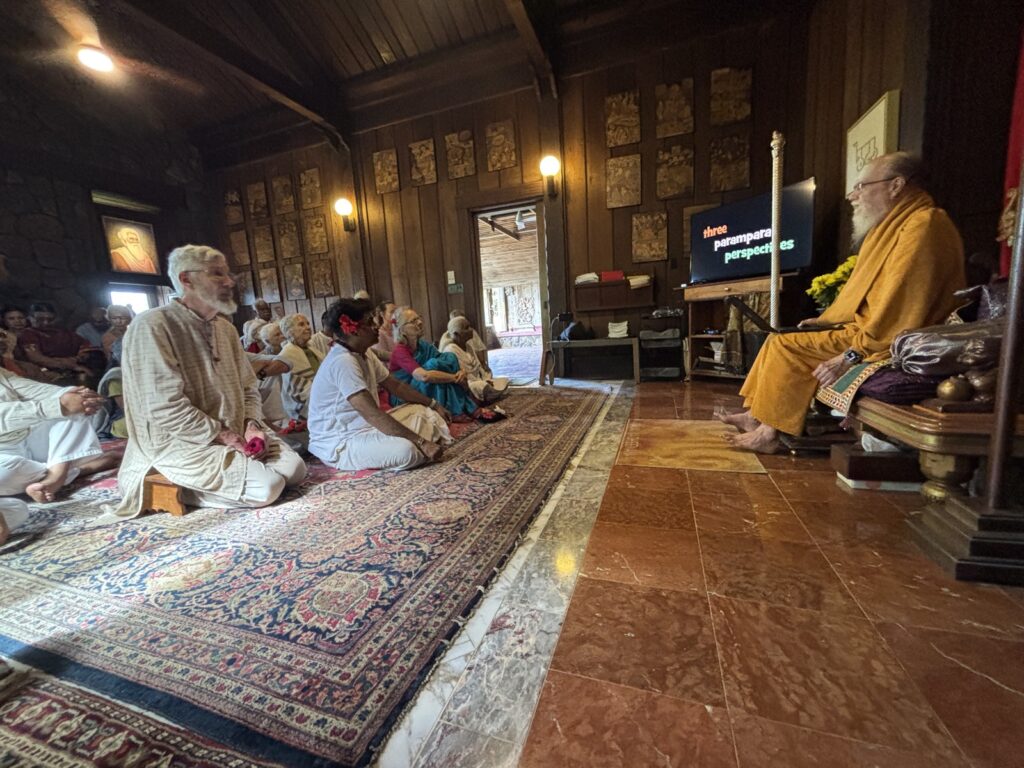
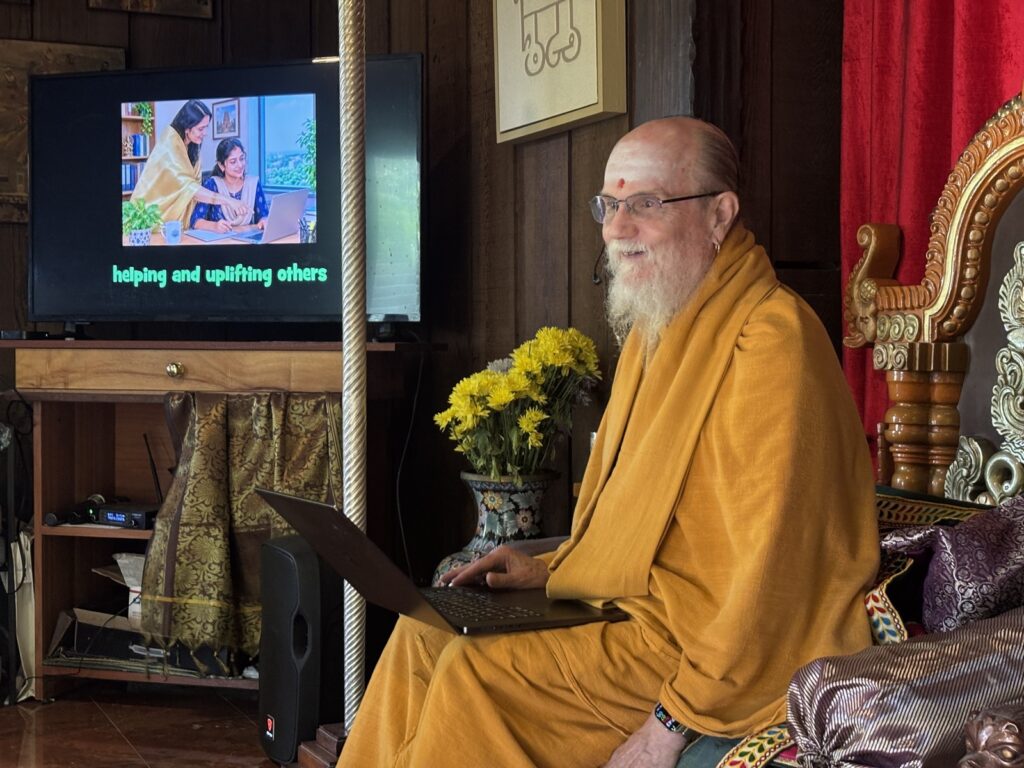
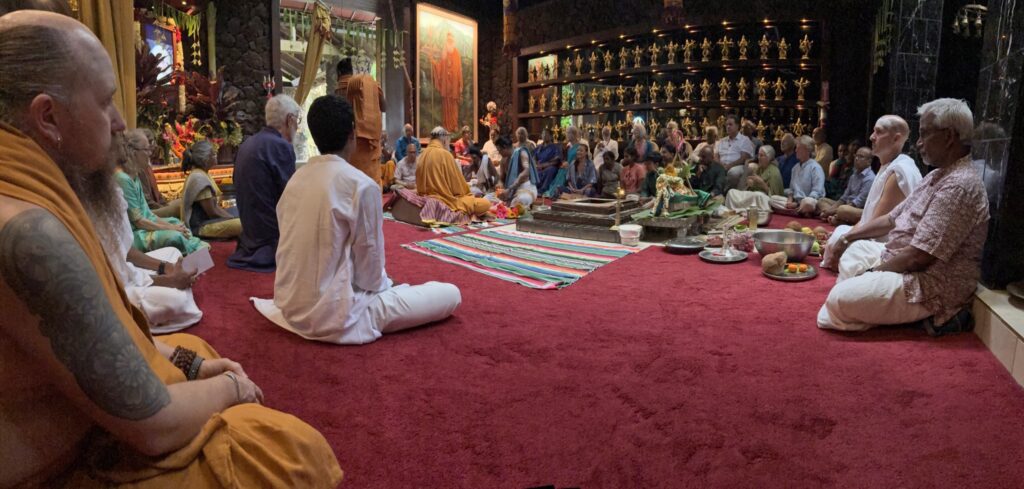
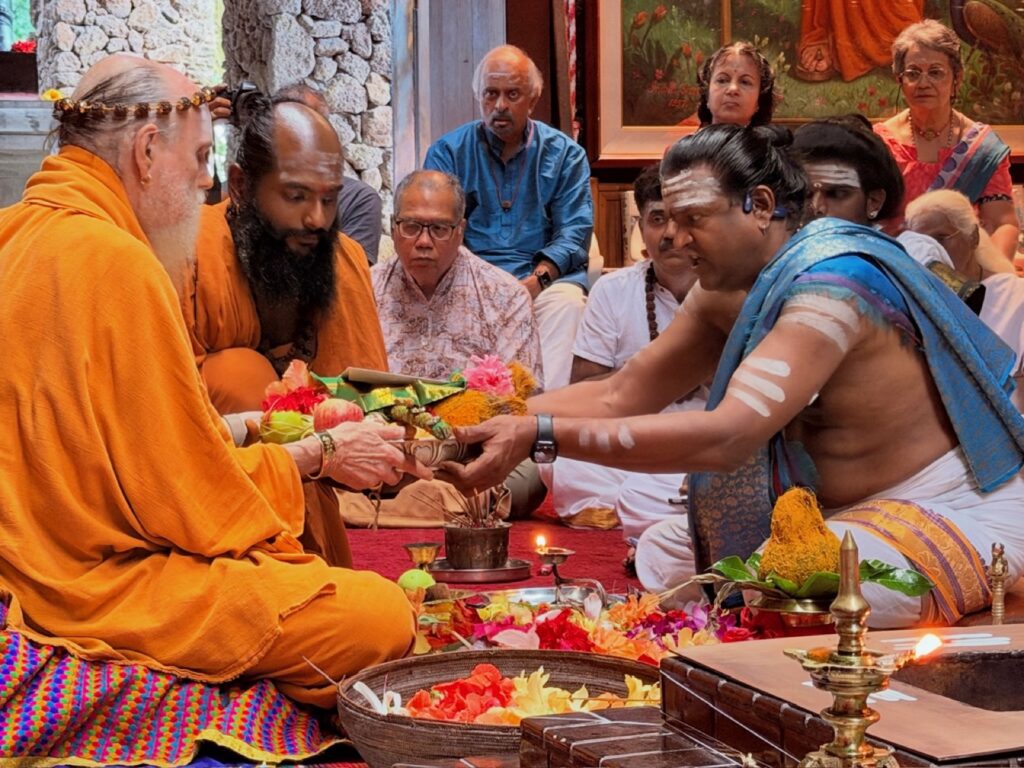
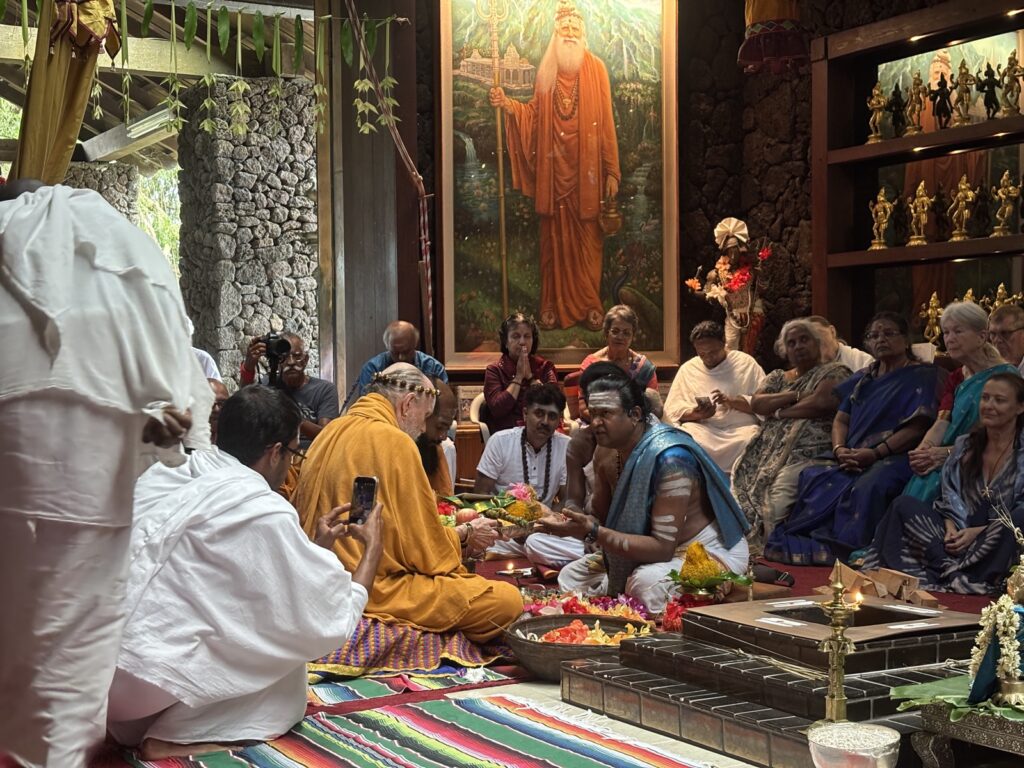
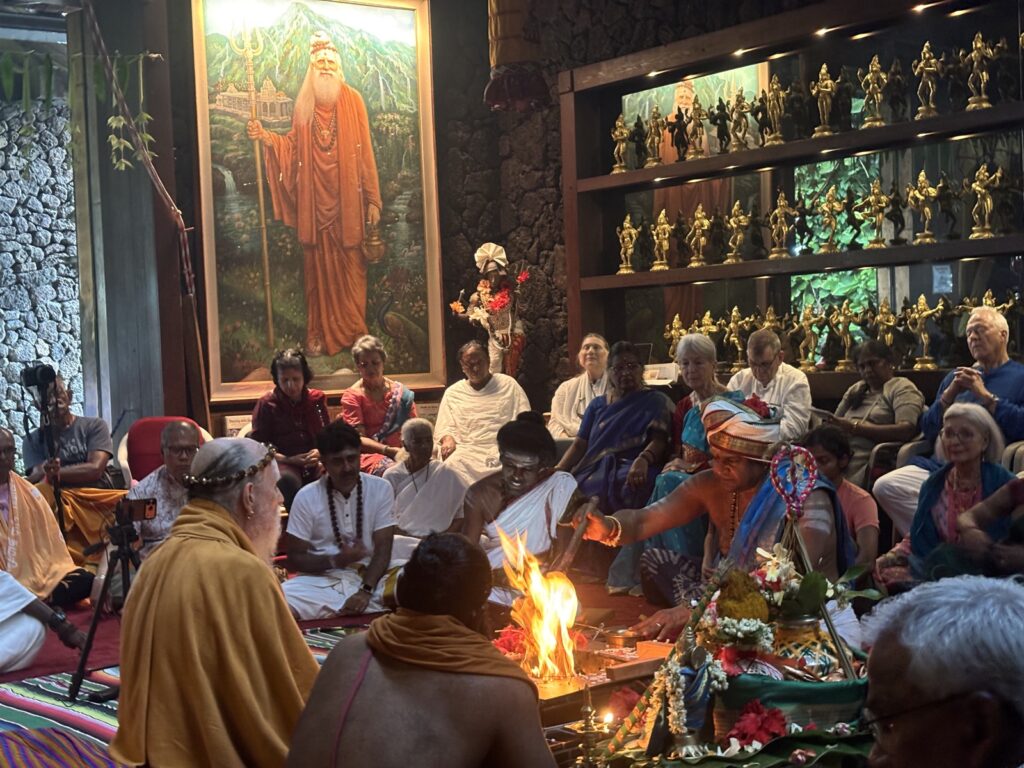
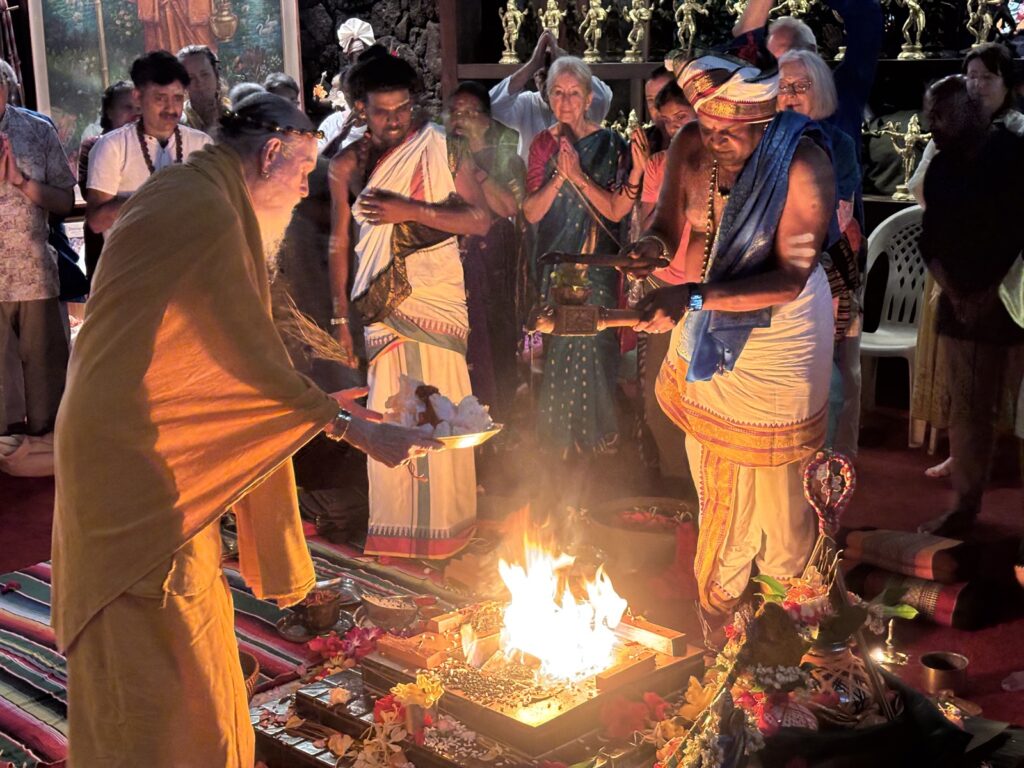
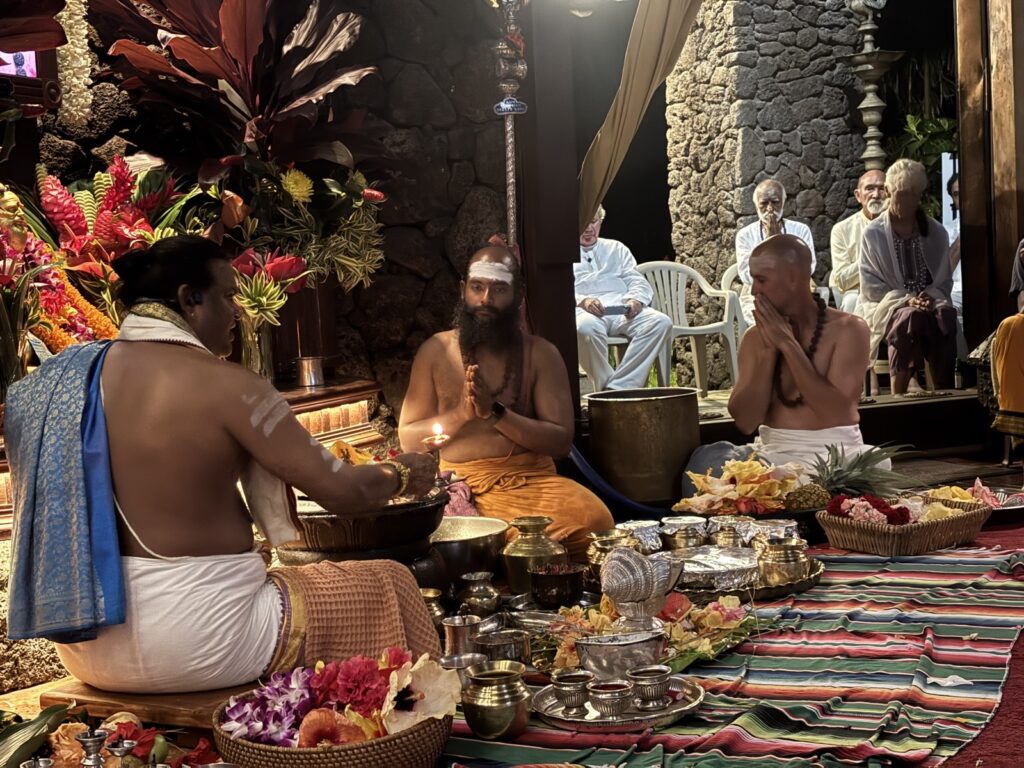
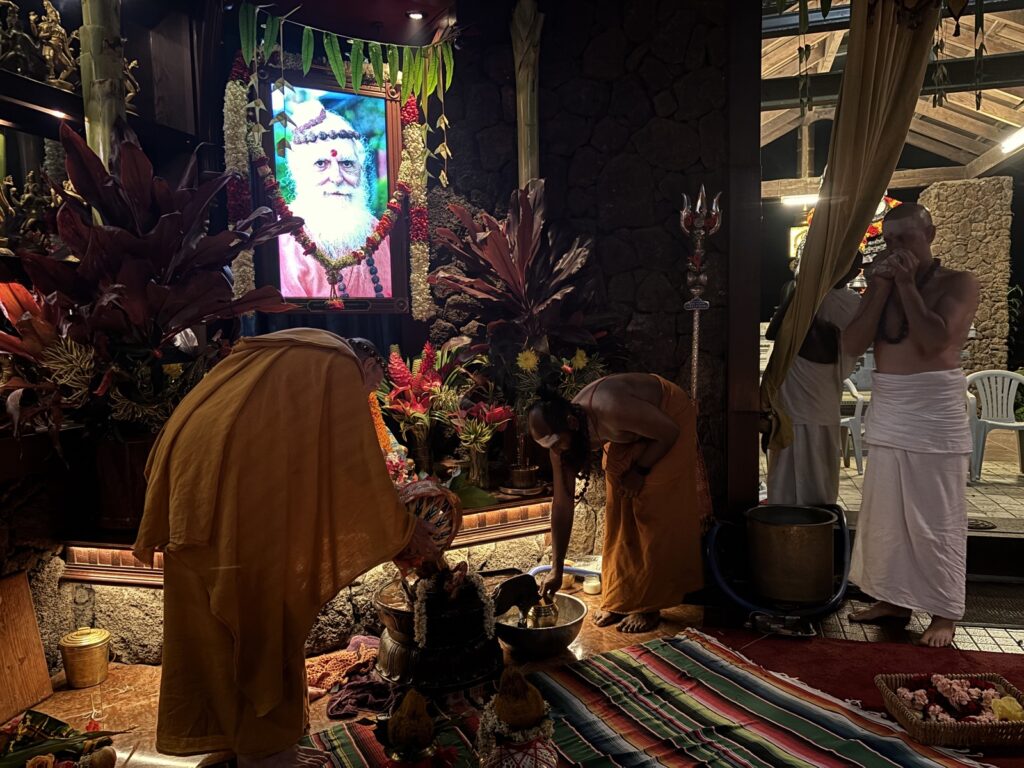
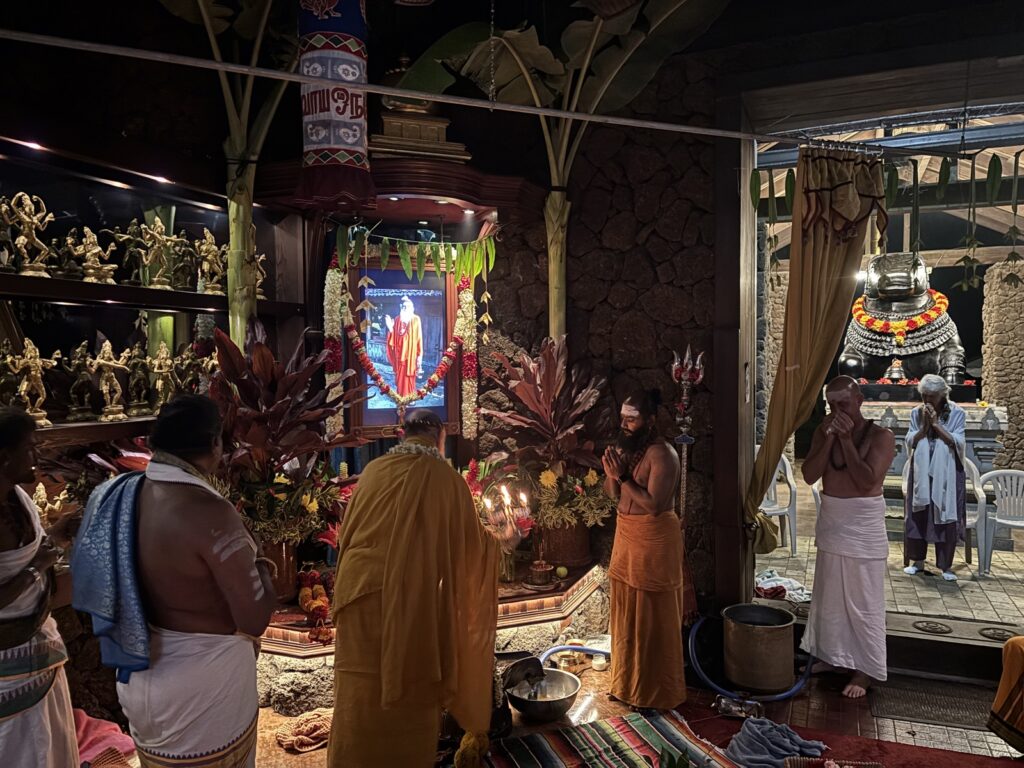
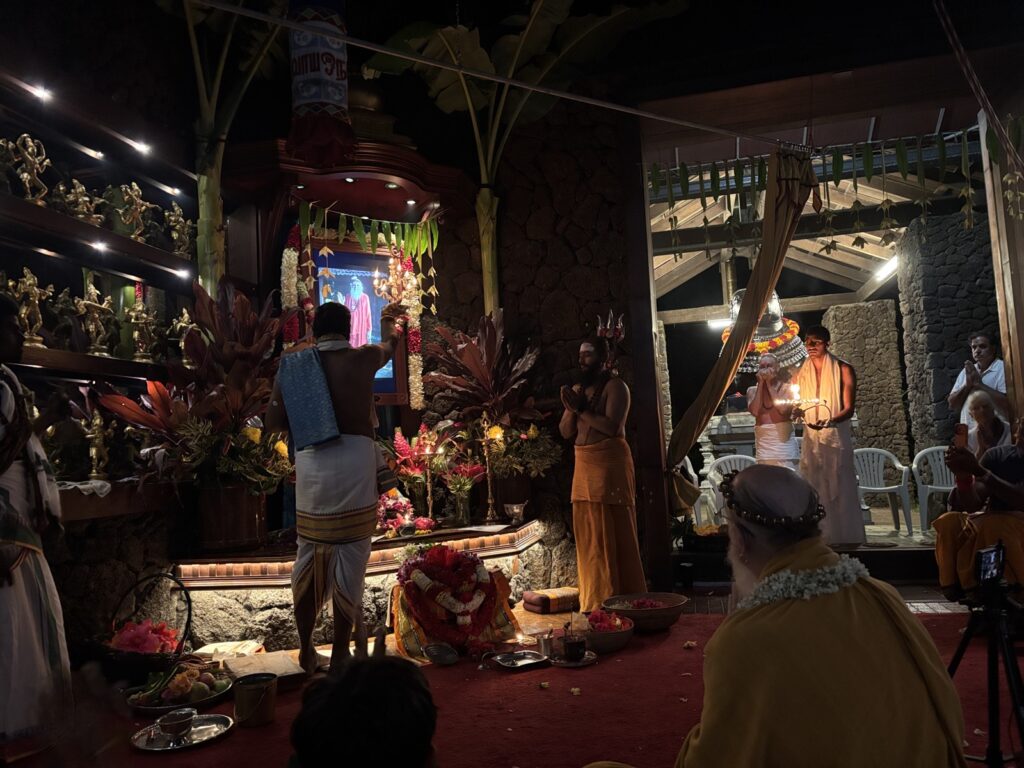
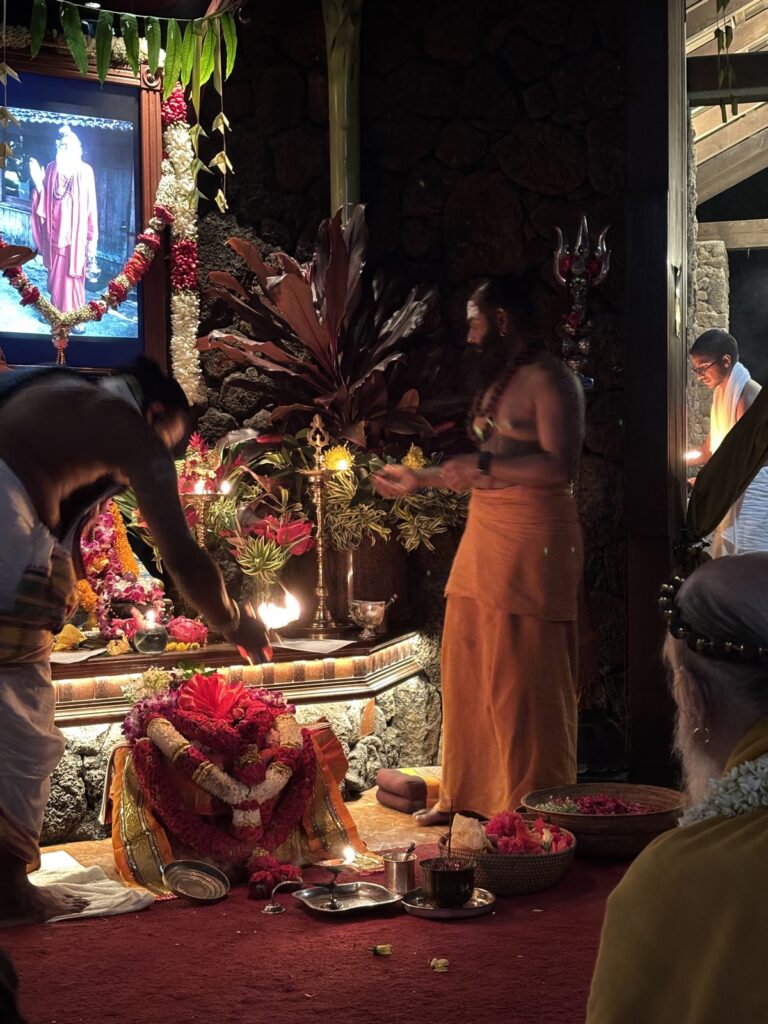
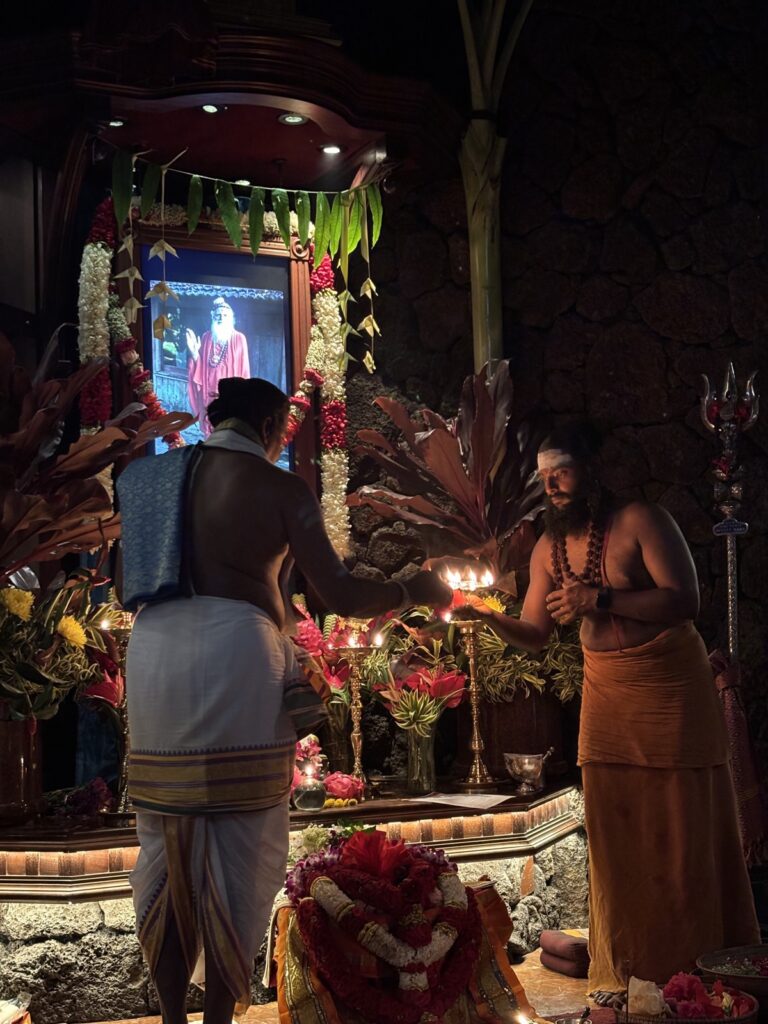
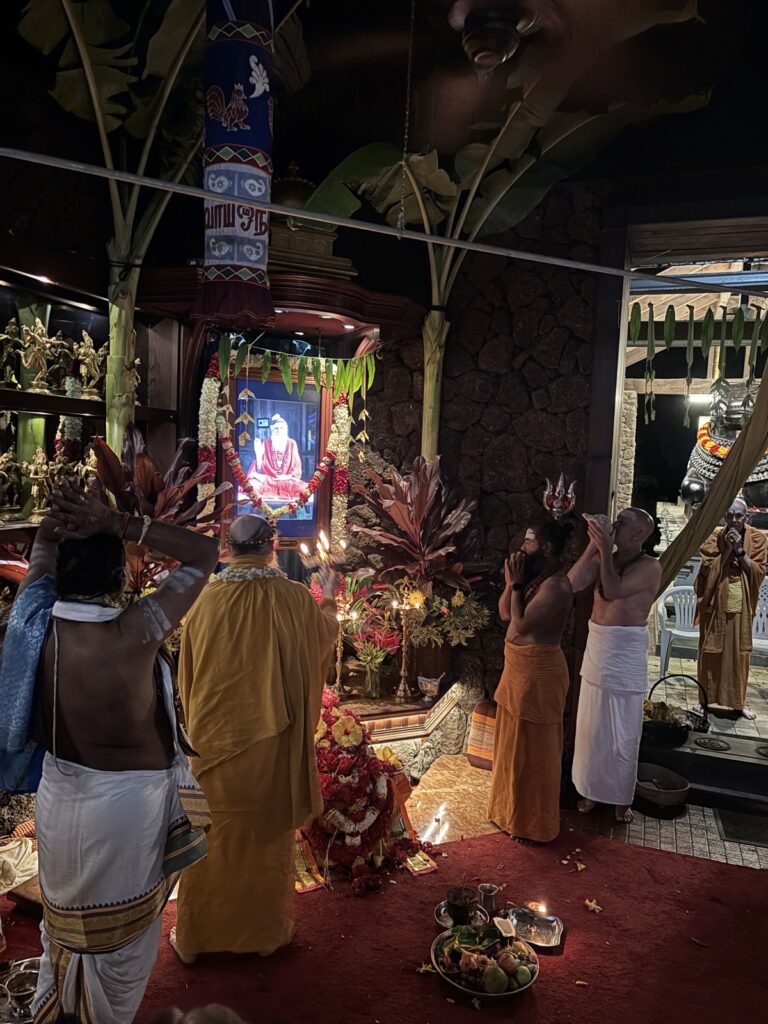
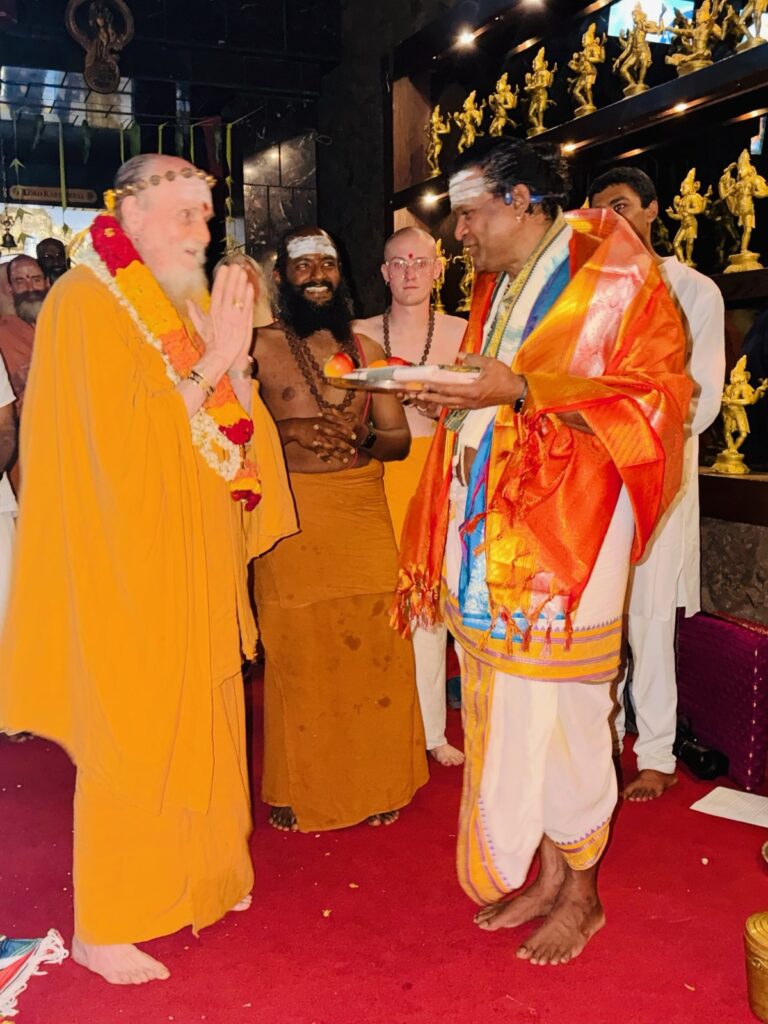
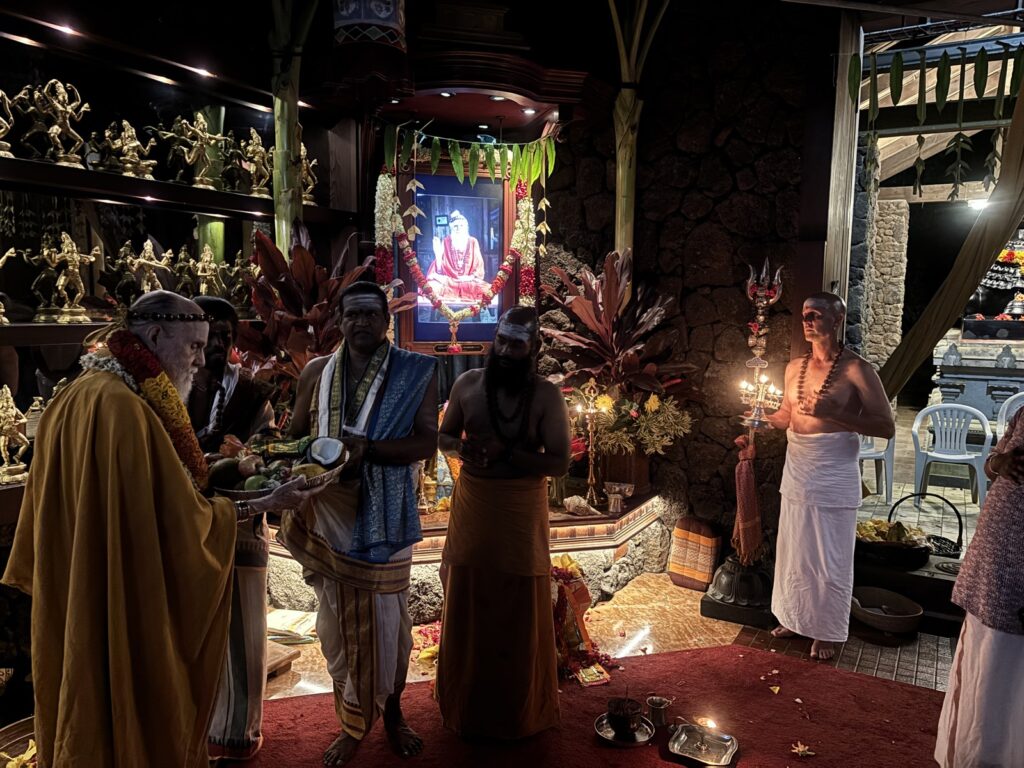
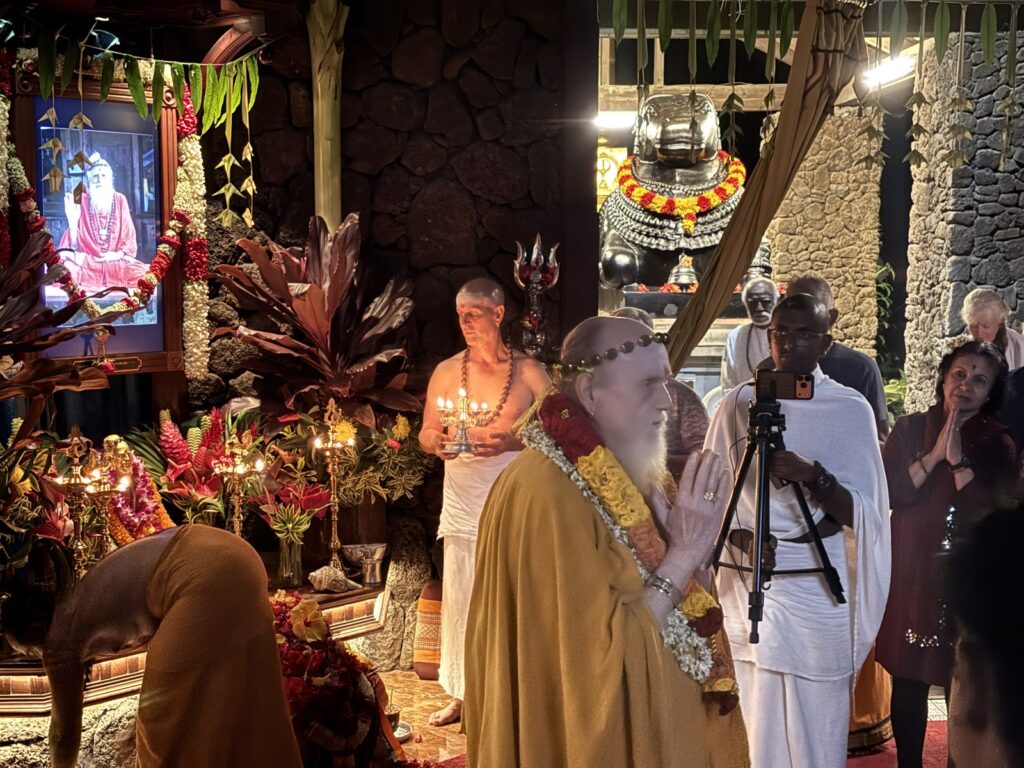
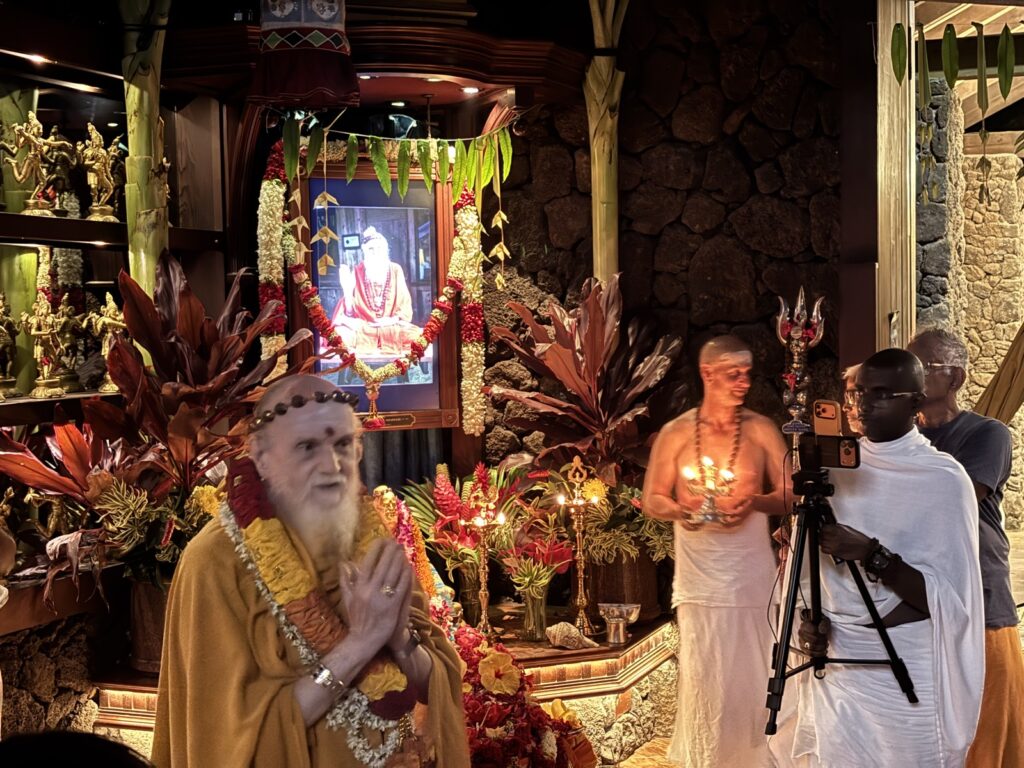
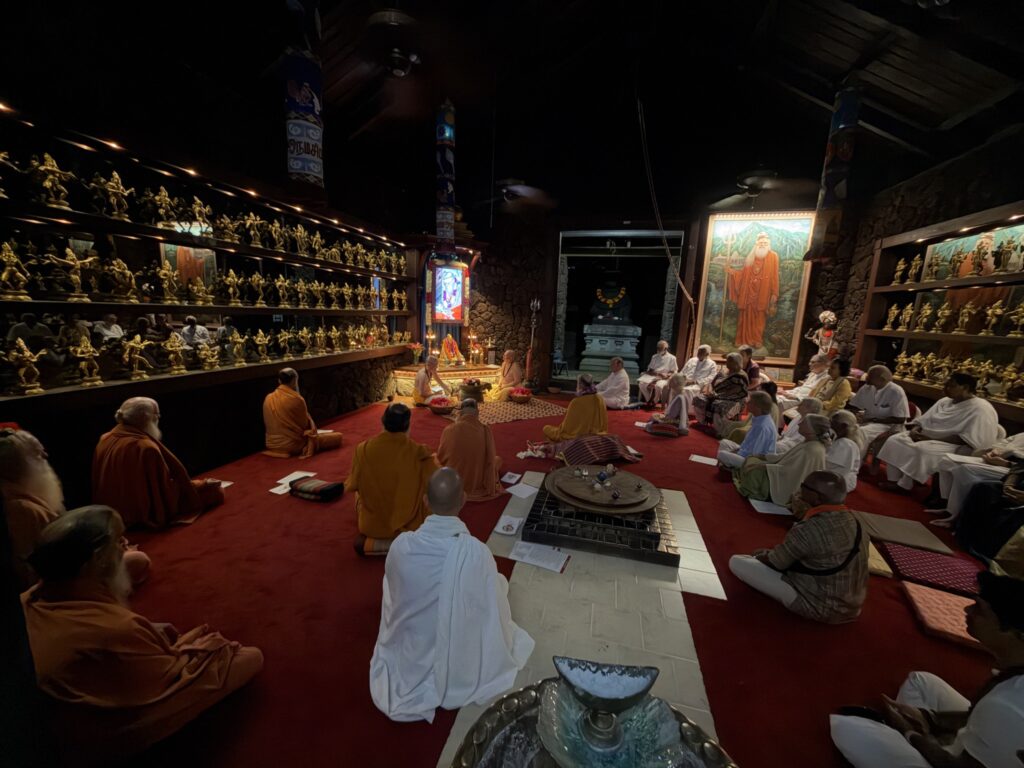
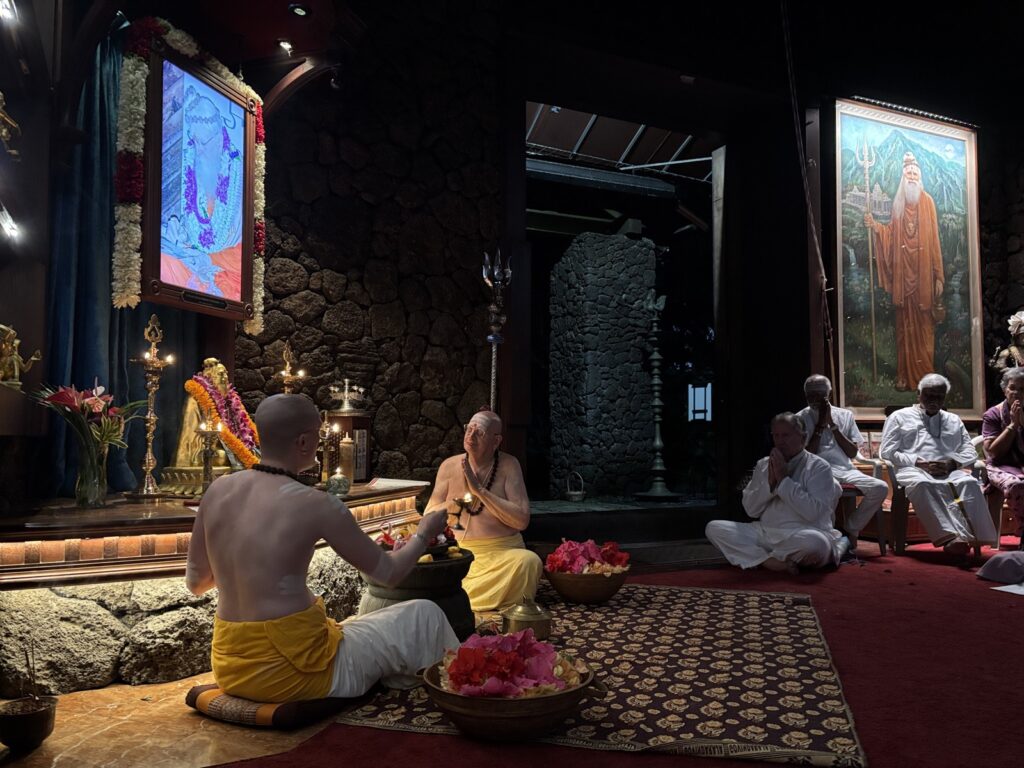
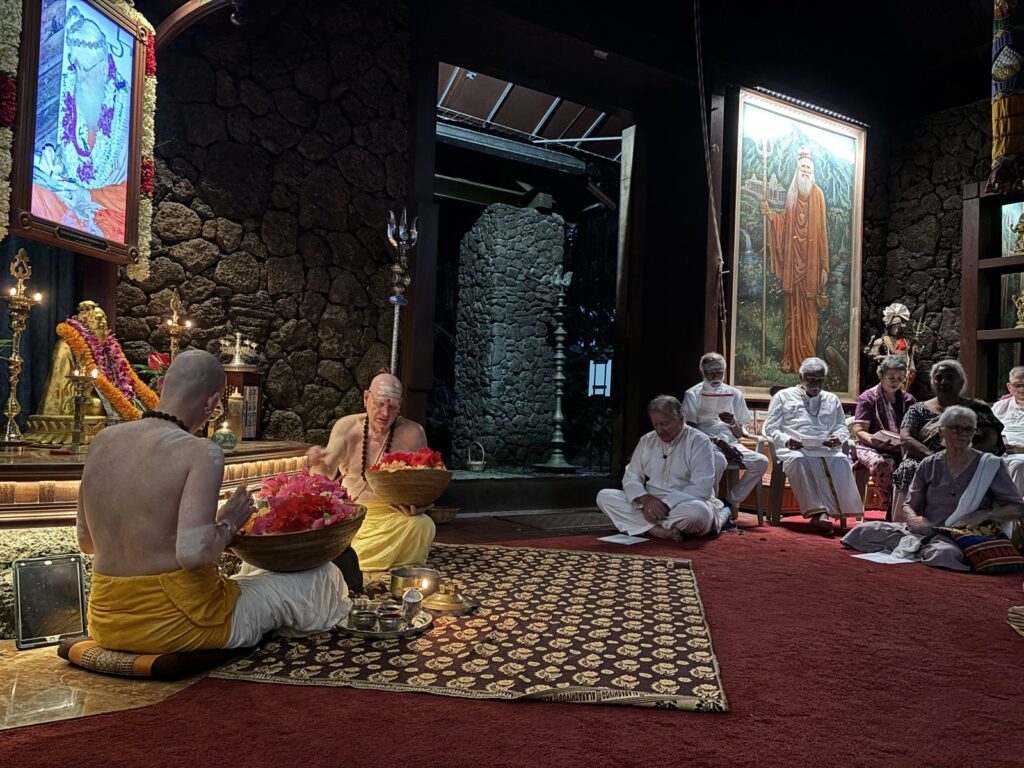
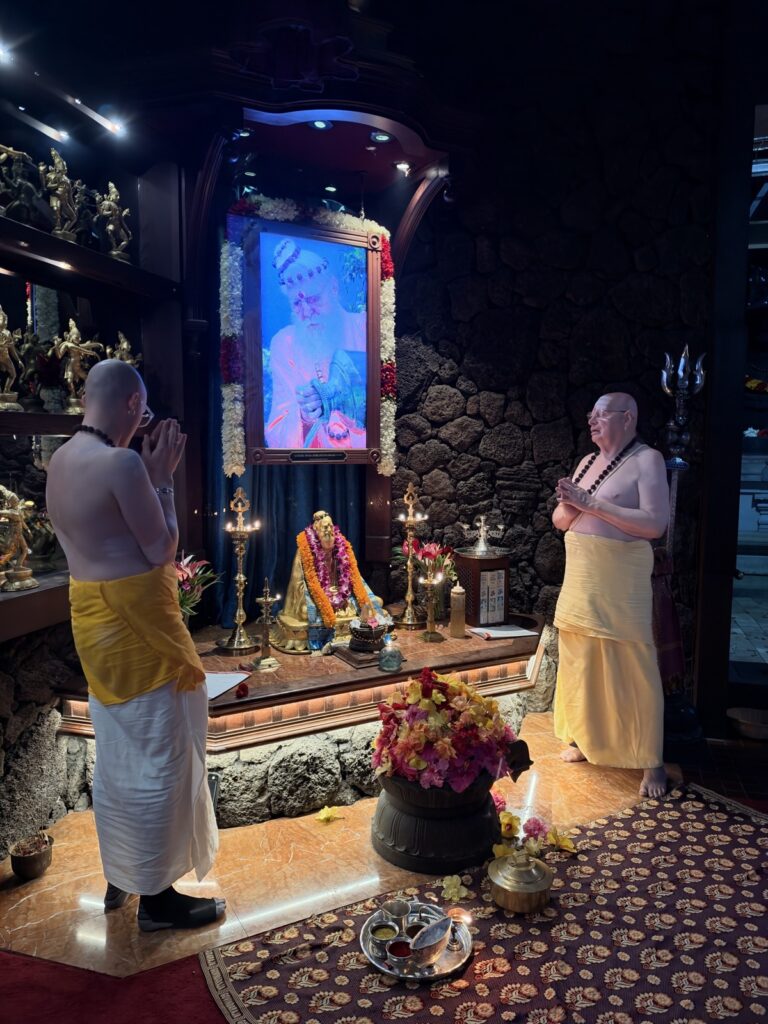
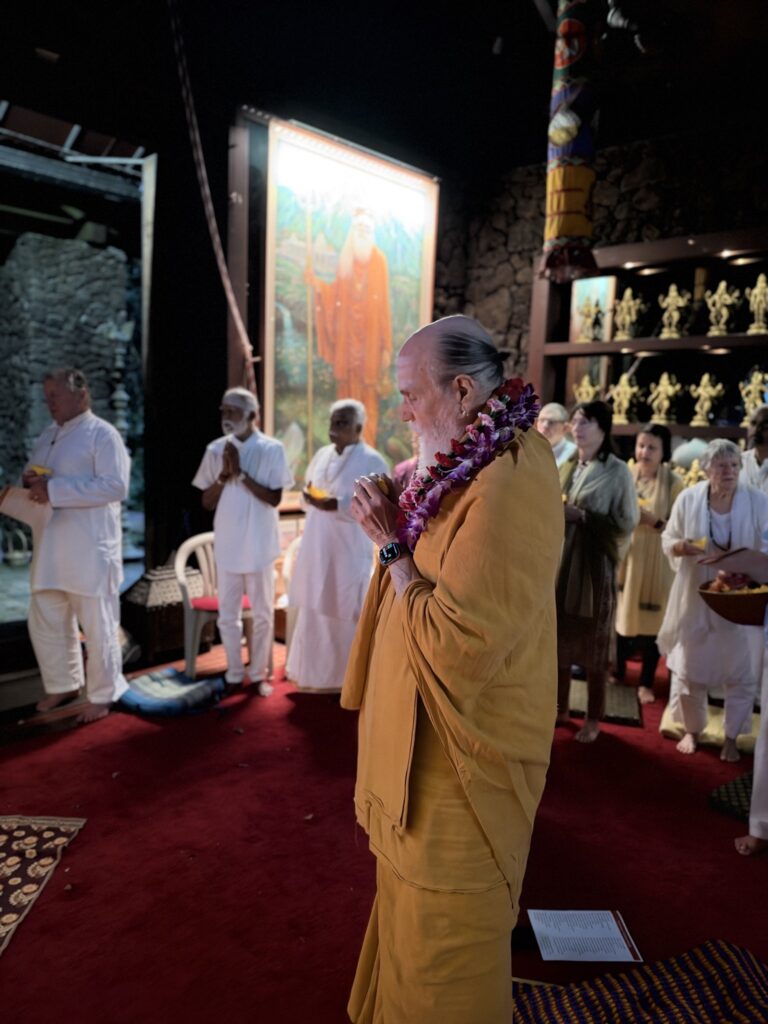
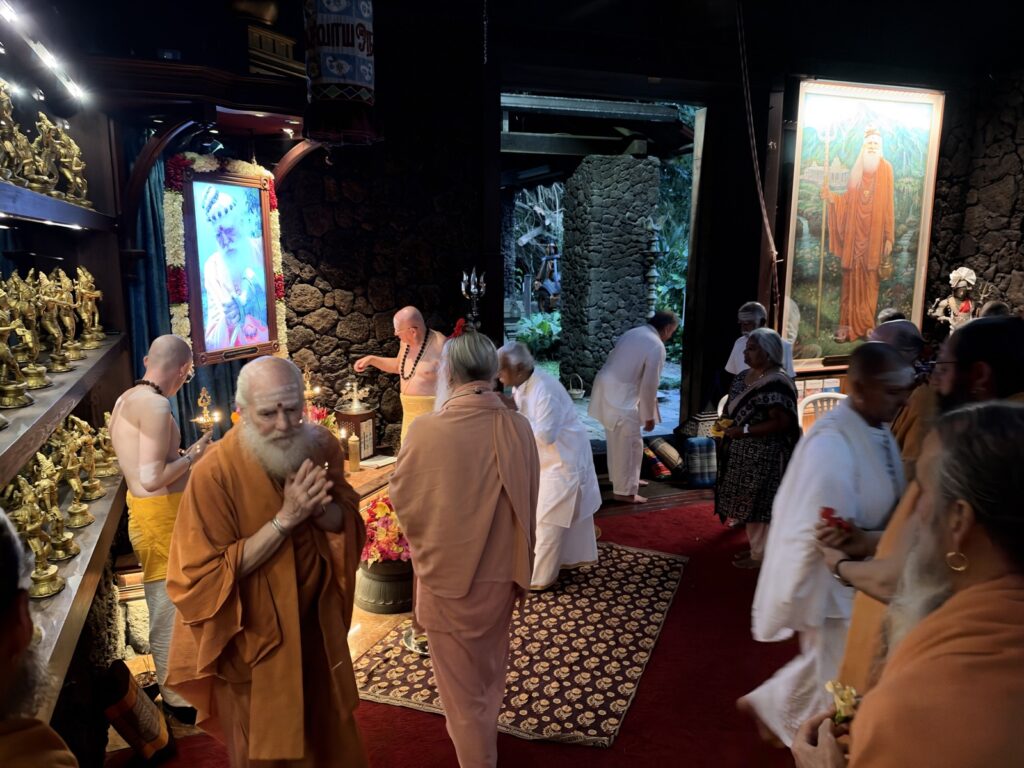
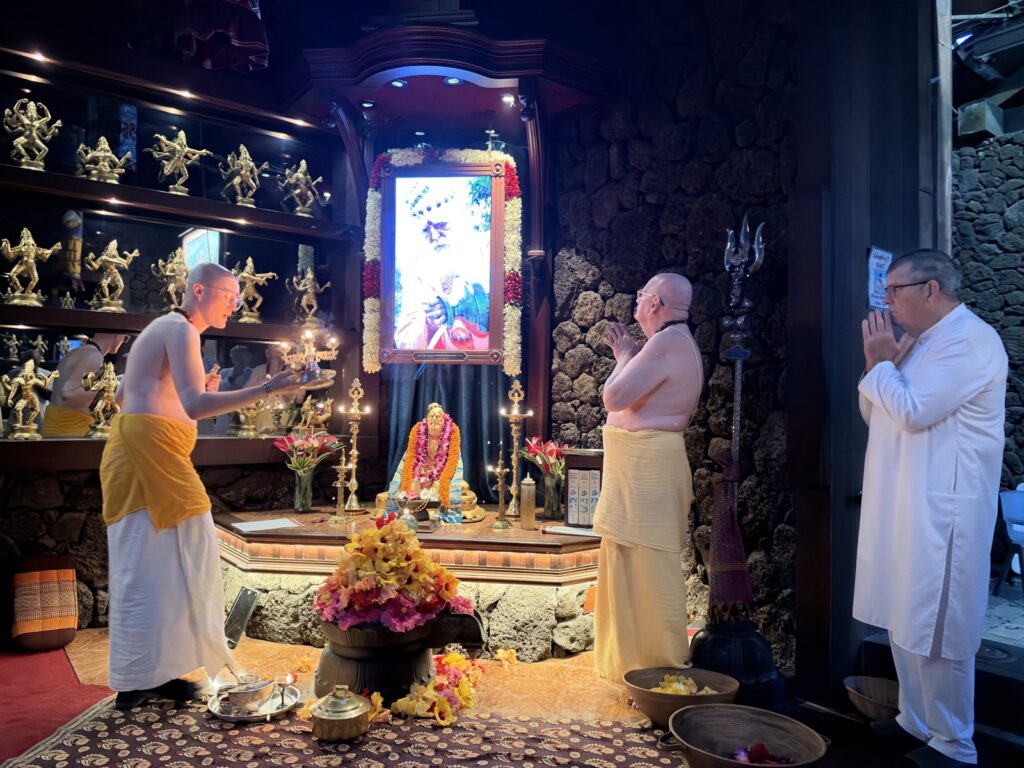
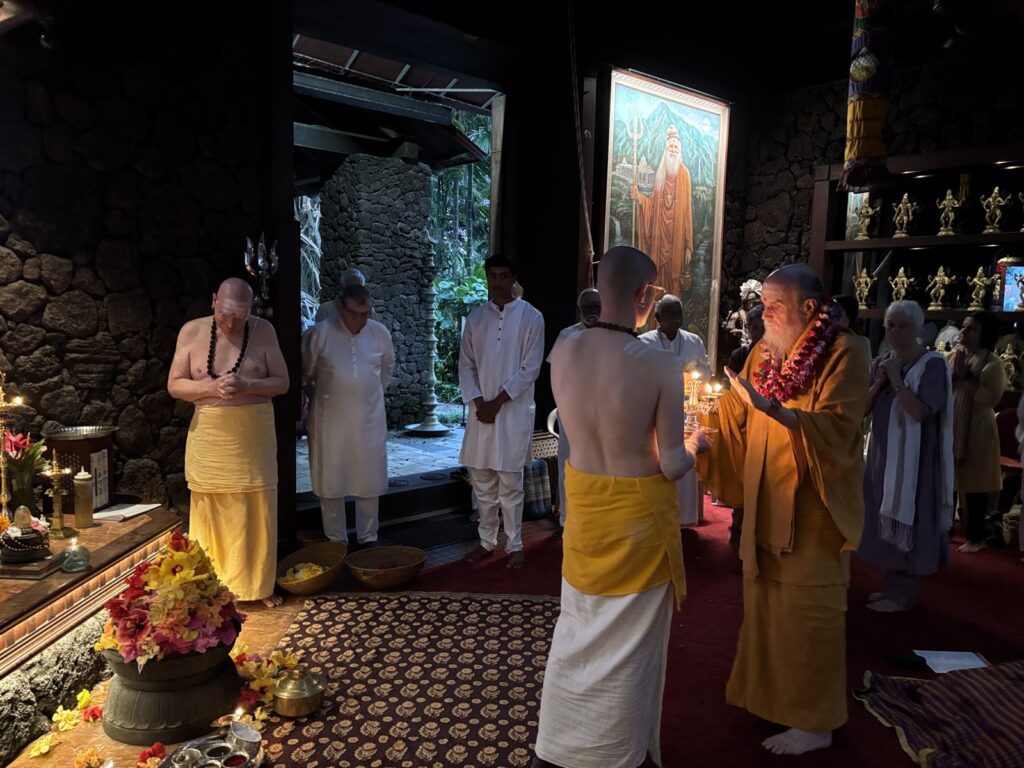
Our final day began with the early morning small Guru puja at the samadhi shrine, followed by satsang with Satguru Bodhinatha in the late morning in the Guru Peedam room. Then at 3:30, Kumar Gurukkal, assisted by Pravin Kumar Gurukkal, began a nearly five-hour process of sankalpa, purification of self and surroundings, invoking Ganesha and Varuna to bless the proceedings and honoring Siva’s abundant provision through the substances produced by the cow. This was followed by a homa to honor and invoke Gurudeva’s presence through Agni and a blessed khumba, after which abhishekam was performed to Gurudeva’s paduka, granite holy sandals, at the samadhi shrine. Everyone enjoyed prasadam at the end, prepared devotedly by our resident cook, Mani.
The last two images in the gallery tell a piece of monastery grounds history. In the early years of the monastery, the front, Tiruneri path leading up to Kadavul Temple was planted on both sides with plumerias and hybrid varieties of hibiscus. As the rains fell abundantly, the nearby banyan tree got larger and additional trees were planted in the area, the plumeria and hibiscus suffered and slowly withered, starting to die off in the early 1990s. We were able to successfully save several by transplanting them out to the other side of the property where there was more sun at the time, near the current rainbow eucalyptus grove beyond Iraivan Temple. They did okay for a while, but surrounding trees slowly got taller, shading them out, leading to a slow demise.
After some unsuccessful attempts with obtaining cuttings, we were able to get one viable cutting from a hibiscus through air layering on a branch for a couple months, just before the entire plant died, as shown in the first photo. After transplanting to the more recently acquired 17 acres, which gets more sunlight and had enough space to establish more rows of hibiscus, the plant is doing very well and producing its first flowers!
S. Devasenapathy Sthapathy examines the wax worker’s progress
Overview of the Silpi Pavilion, a workshop showing the temple building process.
Thank you, Gurudeva!
What a spirit he had! Hard to grasp it has been 25 years now.
Sthapathy is among the finest sculptures in the country, working from his Sri Jayam Industries studio.
On this second day of our 25th Annual Guru Puja honoring the Great Departure of Gurudeva, we were delighted to receive two simple photos from a small shop in Tamil Nadu where an amazing bronze silpi and his team are making a perfect copy of the life-size murti you have all seen here at Kauai Aadheenam.
The new murti is destined for the Spiritual Park in Mauritius. It is being cast from the exact same molds used for the bronze here. All of Holly Young’s molds were shipped some three years ago to India where they were kept safely in the home of Selvanathan Sthapati. But progress was delayed due to a mishap—someone misplaced the head! But some months back it was discovered and all the molds made their way to Swamimalai, the prime center for metal sculptures in India.
The team there is carefully working on the project. We will keep you updated in the months ahead.
This early morning marked our first short Guru puja to honor Satguru Sivaya Subramuniyaswami’s 25th annual Mahasamadhi (Great Departure) period. The actual Mahasamadhi day, with the main puja conducted by Sivasri Kumar Gurukkal, will be on November 6th in line with Chitra nakshatra. The next issue of Hinduism Today magazine with also feature a article on Gurudeva’s life, in celebration of 100 years since his birth.
Here is a early morning upadesha from Gurudeva in 1998–
Preparation for Transition
Description: Gurudeva talks about karma and reincarnation, being greatful for both happiness and sadness. An invitation was received from the Ford Foundation to attend a conference on AIDS to present the Hindu view. Gurudeva discusses the Hindu view concerning knowledge of impending death as being a blessing a great reward. Vasana daha tantra is explained.
As Gurudeva loved to say when traveling, “Up, up and away!” This is the 17th year of our digital fund appeal. It begins November 1 and ends December 31. Like Wikipedia’s annual appeal, our Digital Dharma Drive provides the resources to publish our spiritual works in the year ahead, in an increasingly post-bookstore world.
Imagine this: One day in 1984, Gurudeva is driving through picturesque Kapaa Town on our small island of Kauai. He spots a new computer shop, the first on the island to offer Apple computers, and directs the monks to stop so we can go inside and see what’s up. What we discover will change our lives for decades to come.
Inside, Gurudeva is introduced to the first Macintosh, with its mind-bending 128K of memory, little monochrome screen and curious device called a mouse—all housed in sleek white packaging. We had never seen anything like it. With the boldness that characterized his entire life, he bought one on the spot, and we carried it out to the Jeep. After a week or two exploring MacPaint and MacWrite, he clearly saw how this little machine could empower his monks. Soon, he bought a Macintosh for each of us.
Fast forward to 1997, when the digital waves of the Internet washed ashore on Kauai. Gurudeva was all in. “Let’s start a daily journal!” he proclaimed. And just like that, Today at Kauai Aadheenam, affectionately known as TAKA, was born. One of the pioneering daily monastery journals on the Web, it has been a fixture of our online presence ever since. How’s that for keeping up with the times?
Now, nearly three decades later, another technological revolution is transforming our small publishing team’s work. In just the last three years, artificial intelligence has given us efficiencies we never imagined possible. We are still discovering ways to put this remarkable technology to work—creating short instructional videos, proofreading manuscripts, assisting with Sanskrit and Tamil translations and, perhaps most dramatically, producing artwork at a pace once unimaginable.
Not long ago, creating an illustration for one of our books was a months-long undertaking. We would conceive an idea, sketch it out with detailed descriptions, email our instructions to an artist in Tamil Nadu or Kerala, wait weeks for a preliminary rendering, suggest revisions and then wait another two months for the finished canvas to arrive—all at a cost of $400–500 per piece. Today, a digital image can be accomplished in less than a minute, at a cost of under a dollar! For our recent book Tayumanavar’s Songs to Siva, we created dozens of illustrations in just a few days. What an evolution!
Digital publishing has brought equally remarkable changes. Remember when printing a book meant a substantial investment up front, followed by the challenges of warehousing, shipping and managing unsold inventory? Today, print-on-demand technology allows us to make books available through Amazon without those initial printing costs. And our digital books, magazines and other resources can reach readers around the world almost instantly.
Of course, there is something timeless about holding a beautifully printed magazine or book. We still cherish that experience. But digital publishing has its own special advantages: searchable PDFs and ePubs, instructional videos, audio recordings and a growing library of Hindu resources available wherever an Internet connection can be found. Our Hinduism Today app, available for iOS and Android, puts the magazine into the hands of readers worldwide, free of charge.
Now imagine Gurudeva (1927–2001) seeing the fruits of today’s digital age. With a simple touch on a mobile device, his teachings reach seekers in every corner of the world, without costing readers a penny. His voice, recreated through AI, is heard as devotees explore his Trilogy while commuting, tending to their families or sitting quietly in their home shrines. He always loved high-tech, not as an end in itself, but as a powerful means of sharing timeless spiritual truths. Surely he would be delighted to see how the tools he first placed in his monks’ hands more than four decades ago have evolved, carrying his teachings to seekers around the globe. The technology has changed beyond anything we could have imagined in 1984. The mission has not.
With much aloha and warm greetings during the 2026 holiday season,
The Editors Kauai’s Hindu Monastery Himalayan Academy Publications
We’ve turned one of Satguru’s Publisher’s Editorial articles into a visual storytelling video using AI! We animated the images with AI and edited them into a video using Adobe Premier Pro and After Effects.
We adapted the article’s content into a visual narrative while staying true to its original meaning and message.
Check out the video, and feel free to share your feedback!
For the best viewing experience, watch it in 1080p!